
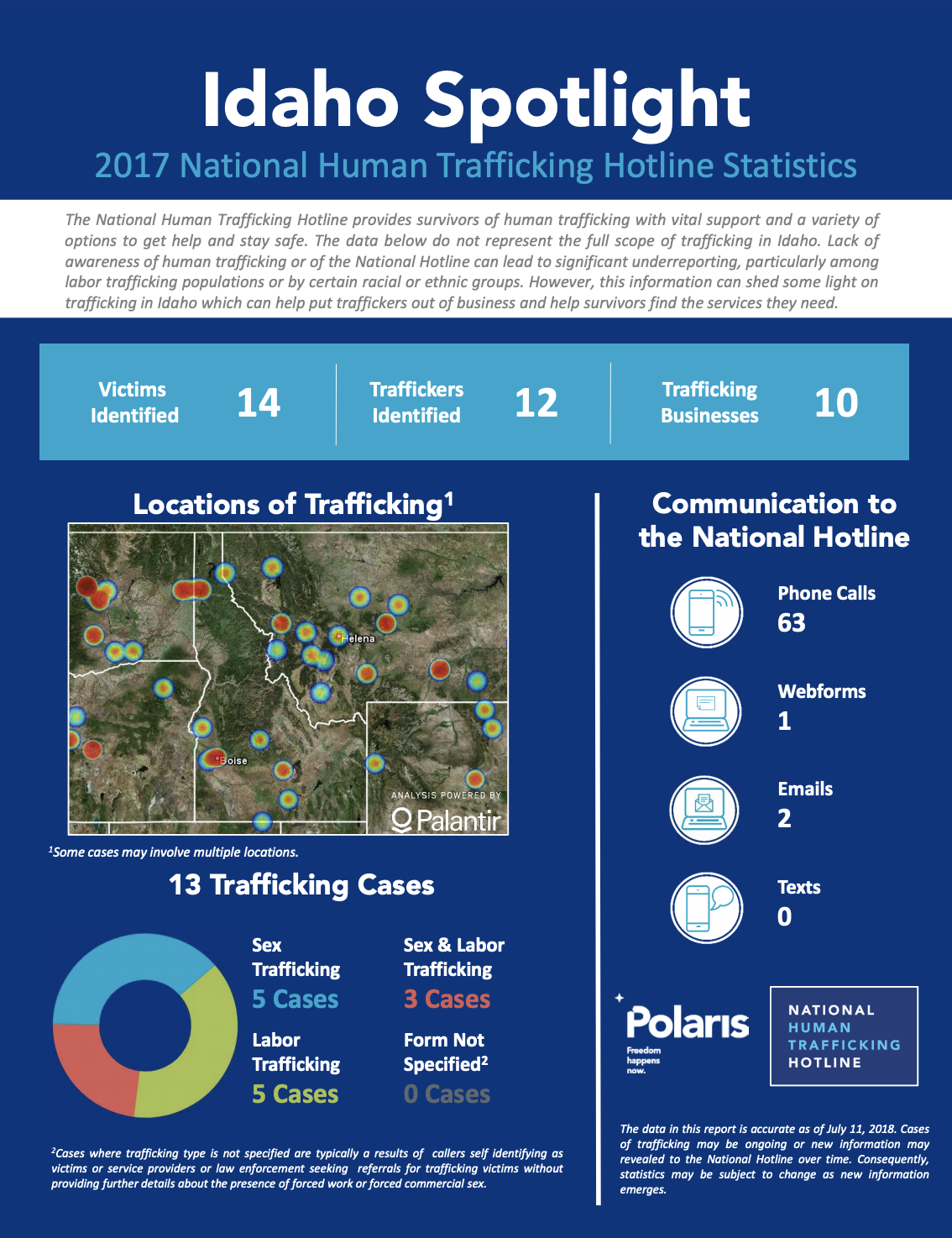
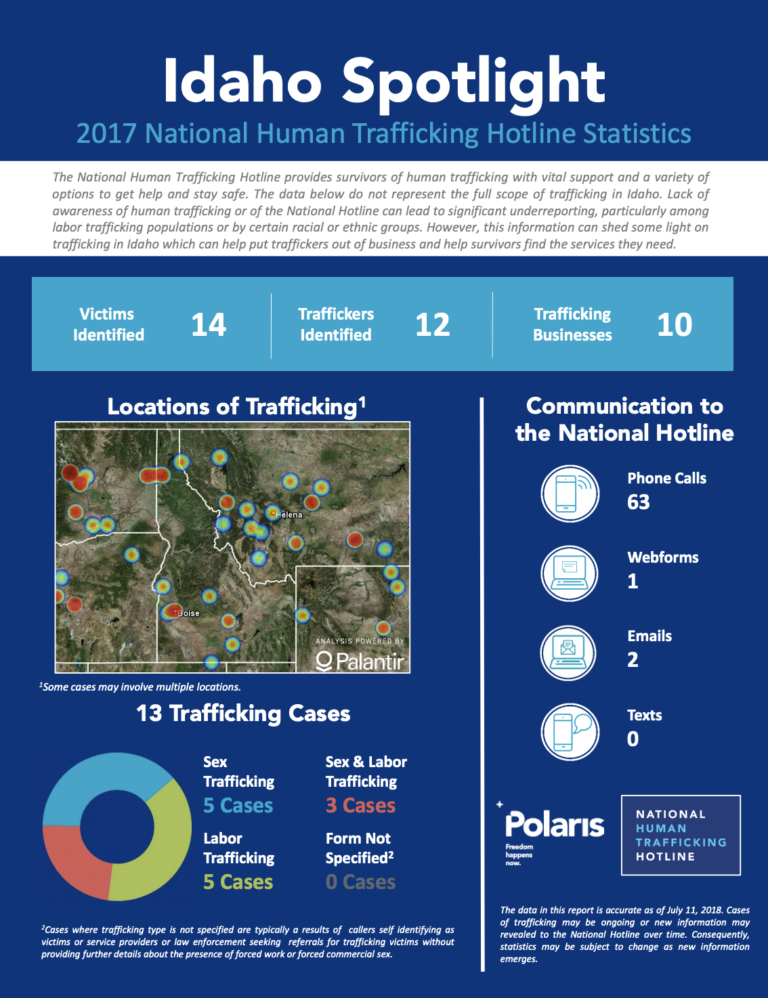
The data in this report represents signals and cases from January 1, 2017 through December 31, 2017 and is accurate as of July 11, 2018. Cases of trafficking may be ongoing or new information may be revealed to the National Hotline over time. Consequently, statistics may be subject to change as new information emerges.

You can download the report infographic below.

National Hotline 2017 Idaho State Report - National Human Trafficking Hotline, 2018 DOWNLOAD

post

page

attachment

revision

nav_menu_item

custom_css

customize_changeset

oembed_cache

user_request

wp_block

wp_template

wp_template_part

wp_global_styles

wp_navigation

wp_font_family

wp_font_face

acf-taxonomy

acf-post-type

acf-field-group

acf-field

ai1ec_event

exactmetrics_note

Corruption and Contemporary Forms of Slavery: Examining Relationships and Addressing Policy Gaps
Publications

Corruption is an underlying cause of and a facilitating tool for practices arising from contemporary forms of slavery; it is essential to creating the conditions for a low-cost, low-risk, high-profit illicit trade in vulnerable individuals. Yet, cor...Read More

Modern Slavery in Nepal: Understanding the problem and existing responses
Publications

Survey data suggests that a minimum, some 229,000 Nepali's were subject to some form of modern slavery in 2014. While some of this involved victims and offenders within Nepal itself, a significant proportion is likely to have been exploited outside ...Read More

TAGS: Asia
National Hotline 2017 Georgia State Report
Graphics & InfographicsPublications

The data in this report represents signals and cases from January 1, 2017 through December 31, 2017 and is accurate as of July 11, 2018. Cases of trafficking may be ongoing or new information may be revealed to the National Hotline over time. Conseq...Read More

Assessing Labor Risk for Workers Migrating from the Philippines to Europe
GuidancePublications

Millions of people from the Philippines have migrated abroad for employment, seeking a better life and improved economic status for themselves and their families. Today, over 10 million Filipinos are estimated to live and work internationally, with ...Read More