
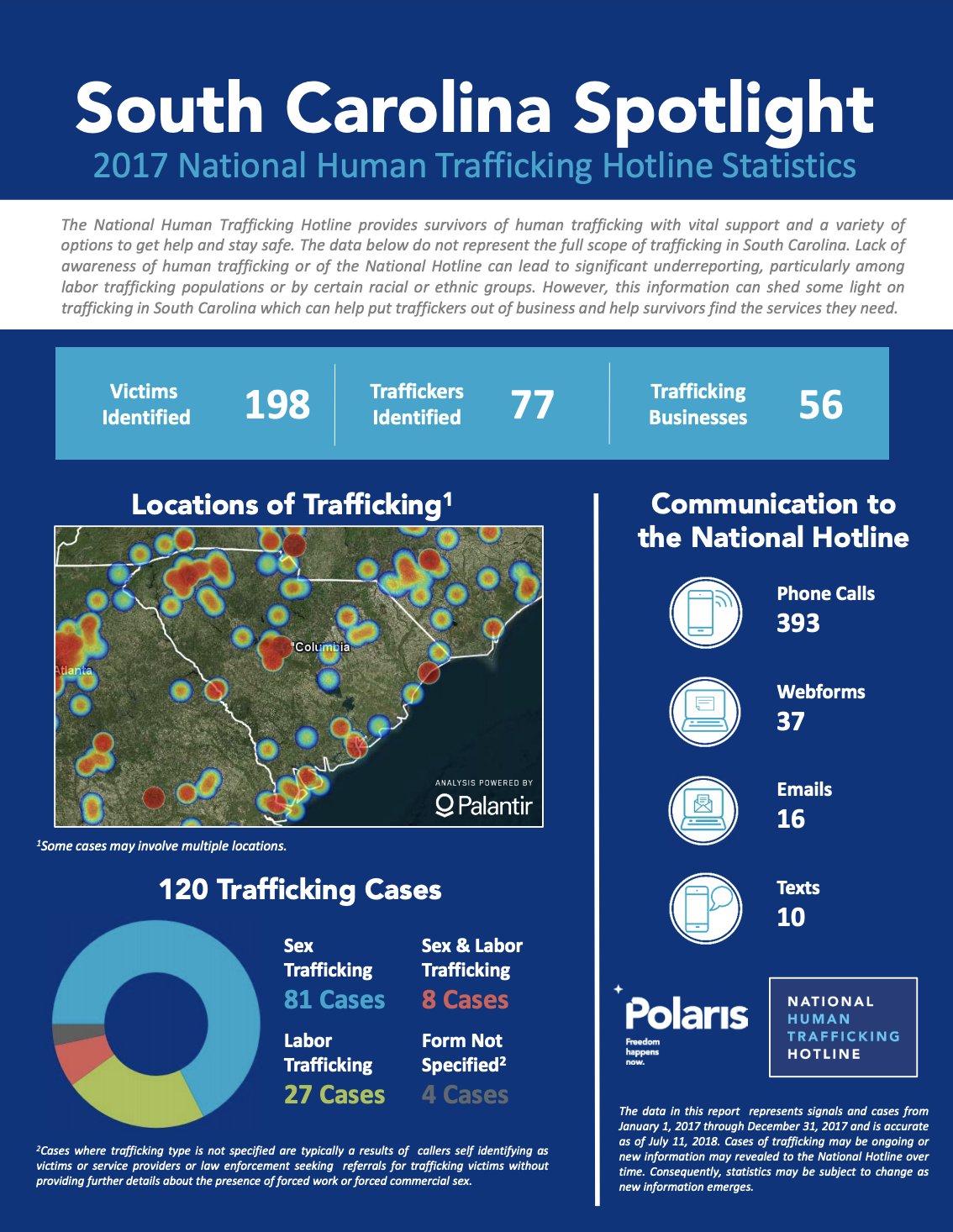
The data in this report represents signals and cases from January 1, 2017 through December 31, 2017 and is accurate as of July 11, 2018. Cases of trafficking may be ongoing or new information may be revealed to the National Hotline over time. Consequently, statistics may be subject to change as new information emerges.

You can download the report infographic below.

National Hotline 2017 South Carolina State Report - National Human Trafficking Hotline, 2018 DOWNLOAD

post

page

attachment

revision

nav_menu_item

custom_css

customize_changeset

oembed_cache

user_request

wp_block

wp_template

wp_template_part

wp_global_styles

wp_navigation

wp_font_family

wp_font_face

acf-taxonomy

acf-post-type

acf-field-group

acf-field

ai1ec_event

exactmetrics_note

Modern Slavery: Deceptive and Coercive Recruitment
GuidanceGood PracticesGraphics & Infographics

Workers are recruited via unlicensed third-party agencies. Use of unlicensed third-party agencies increases the risk of labor exploitation. Workers pay for recruitment, employment or repatriation fees. Costs associated with employment can place ...Read More

TAGS: Global
Tobacco’s Hidden Children: Hazardous Child Labour in United States Tobacco Farming
Publications

Methodology This report is based on interviews with 141 children ages 7 to 17 who said they had worked in tobacco farming in the United States in 2012 or 2013. During multiple field research trips between May and October 2013, Human Rights Watch ...Read More

The Emperor has no clothes: Garment Supply Chains in the Time of Pandemic
COVID-19 resourcesPublications

Asia Floor Wage Alliance (AFWA), an Asian labour-led global labour and social alliance, has been monitoring the impact of the COVID-19 pandemic on workers in garment-producing countries through ground reports from AFWA partners and allies in Cambodi...Read More

Hidden Chains: Rights Abuses and Forced Labour in Thailand’s Fishing Industry
Publications

The report by Human Rights Watch describes how migrant fishers from neighboring countries in Southeast Asia are often trafficked into fishing work, prevented from changing employers, not paid on time, and paid below the minimum wage. Migrant workers ...Read More