
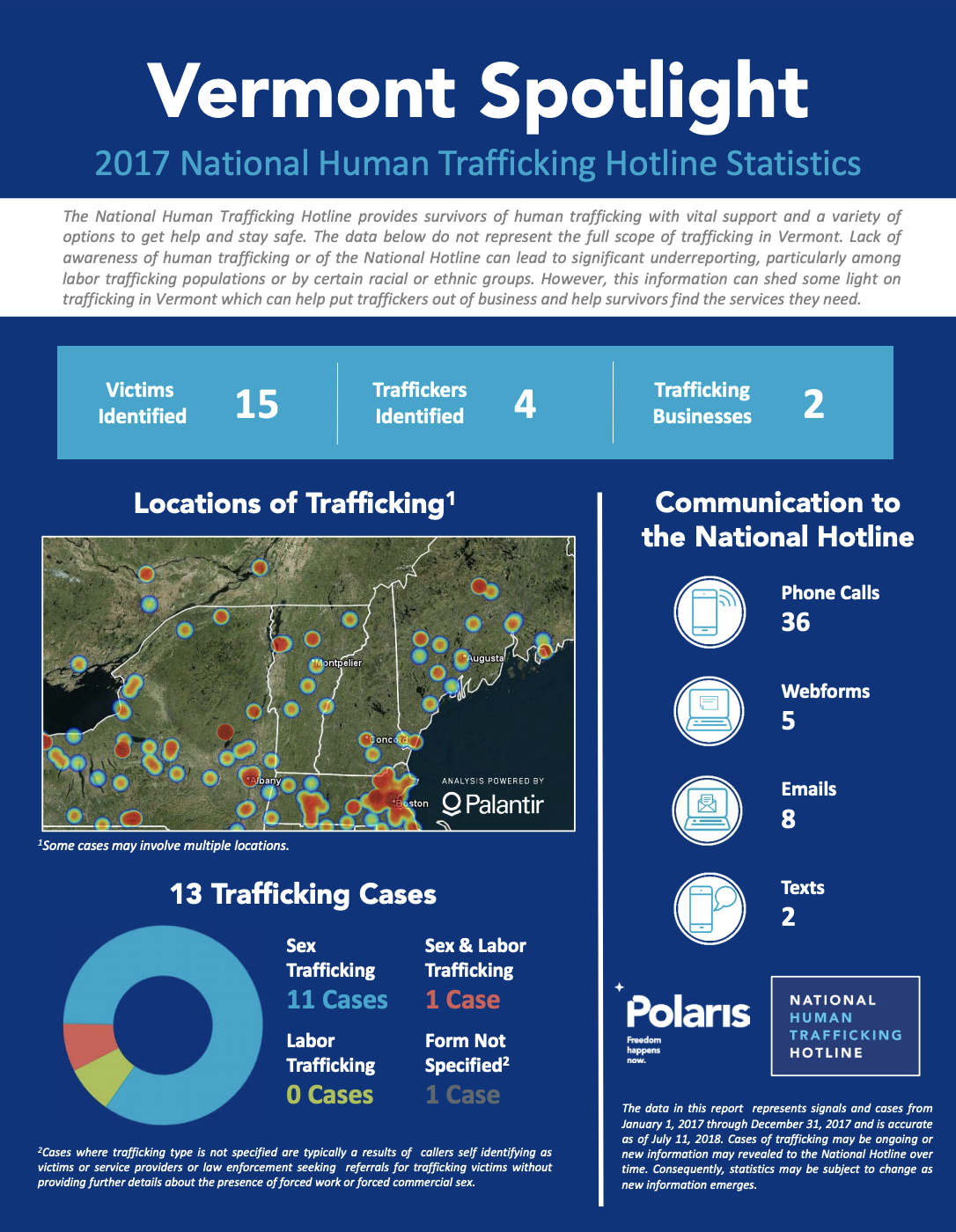
The data in this report represents signals and cases from January 1, 2017 through December 31, 2017 and is accurate as of July 11, 2018. Cases of trafficking may be ongoing or new information may be revealed to the National Hotline over time. Consequently, statistics may be subject to change as new information emerges.

You can download the report infographic below.

National Hotline 2017 Vermont State Report - National Human Trafficking Hotline, 2018 DOWNLOAD

post

page

attachment

revision

nav_menu_item

custom_css

customize_changeset

oembed_cache

user_request

wp_block

wp_template

wp_template_part

wp_global_styles

wp_navigation

wp_font_family

wp_font_face

acf-taxonomy

acf-post-type

acf-field-group

acf-field

ai1ec_event

exactmetrics_note

Fig Leaf for Fashion: How Social Auditing Protects Brands and Fails Workers
Publications

This September 2019 report offers an extensive analysis of the corporate controlled audit industry, connecting the dots between the most well known business-driven social compliance initiatives, such as Social Accountability International, WRAP, the...Read More

The Landscape of Sexual Exploitation of Children in South Africa
Publications

The Landscape of Sexual Exploitation of Children in South Africa is the result of a research collaboration led by ECPAT International to describe the context for sexual exploitation of children in South Africa. The project was a collaboration with t...Read More

The Perth Forum – Work Plan for 2017/2018
Publications

The paramount objective of the Perth Forum is to harness the power of both government and business to end modern slavery. Addressing the issues of modern slavery is complex, involving a range of stakeholders, across a diverse and dynamic region.A...Read More

Action against child labour in Lebanon: A mapping of policy and normative initiatives
Publications

The ILO commissioned this report from Ms. Hayat Osseiran, an independent researcher on child labour issues. The report should not be construed as representing the views of the ILO. The views expressed are those of the author and do not necessarily ...Read More