
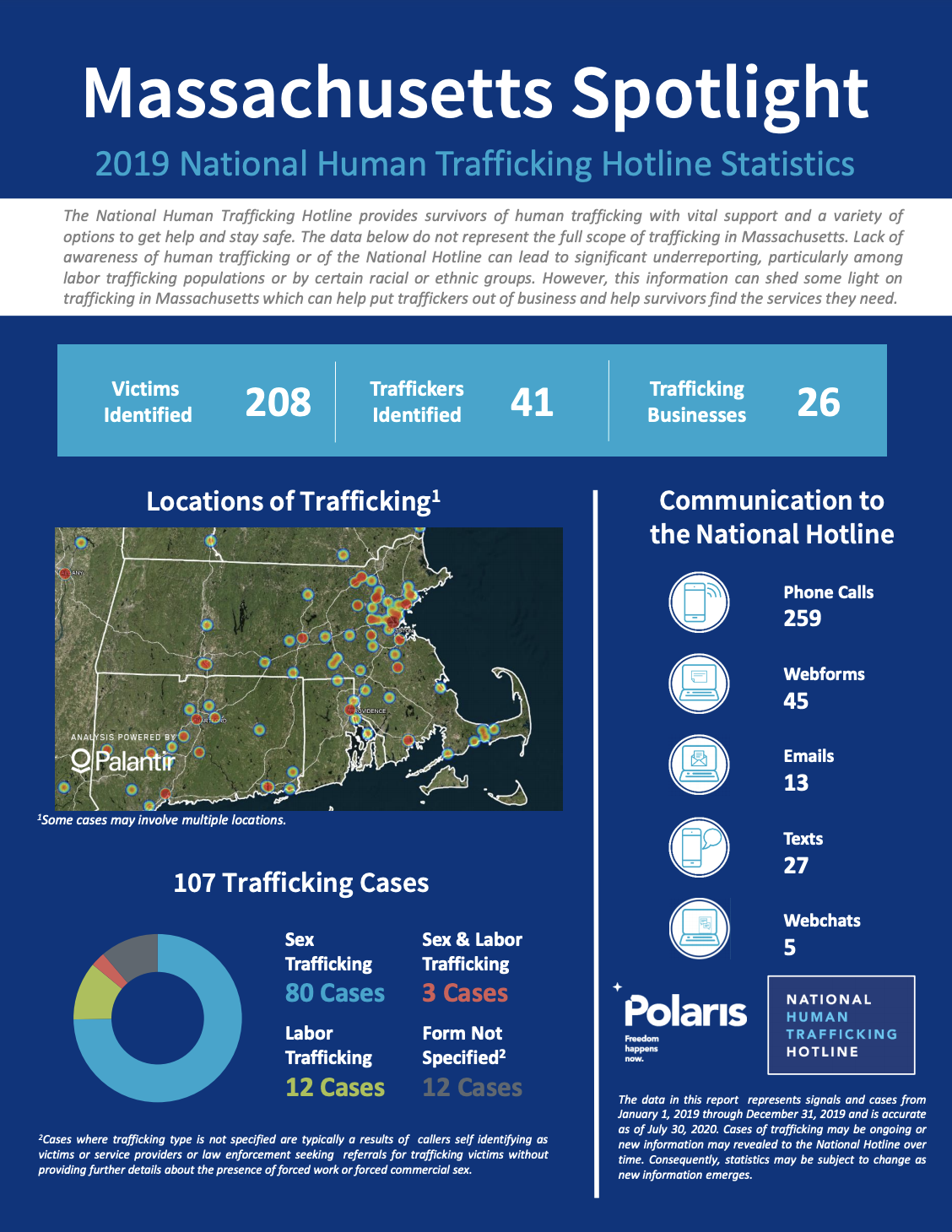
The data in this report represents signals and cases from January 1, 2019 through December 31, 2019 and is accurate as of July 30, 2020. Cases of trafficking may be ongoing or new information may revealed to the National Hotline over time. Consequently, statistics may be subject to change as new information emerges.

You can download the report infographic below.

National Hotline 2019 Massachusetts State Report - National Human Trafficking Hotline, 2020 DOWNLOAD

post

page

attachment

revision

nav_menu_item

custom_css

customize_changeset

oembed_cache

user_request

wp_block

wp_template

wp_template_part

wp_global_styles

wp_navigation

wp_font_family

wp_font_face

acf-taxonomy

acf-post-type

acf-field-group

acf-field

ai1ec_event

exactmetrics_note

DISRUPTED CHILDHOOD – The Cost of Persuasive Design
Publications

Significant technological advances are very often accompanied by concerned debate. Will our daily lives be improved or disrupted? Will the need for human intervention or interaction be reduced? Will our relationships change? Digital technologies, un...Read More

TAGS:
“If I Could Change Anything About My Work…” Participatory Research with Cleaners In The UK
Publications

This working paper, based on participatory research carried out with cleaners in the UK, highlights key workplace issues in the cleaning sector, and the risk and resilience factors that impact cleaners’ vulnerability to labour abuse and exploitati...Read More

TAGS: Europe
Financial Exploitation:Collecting Meaningful Data
GuidancePublications

The vast majority of modern slavery and human trafficking cases involve interaction with finance in some form. In many cases, traffickers exploit their victims financially, taking control of their bank accounts, confiscating wages, and using debt as...Read More

Action against child labour in Lebanon: A mapping of policy and normative initiatives
Publications

The ILO commissioned this report from Ms. Hayat Osseiran, an independent researcher on child labour issues. The report should not be construed as representing the views of the ILO. The views expressed are those of the author and do not necessarily ...Read More