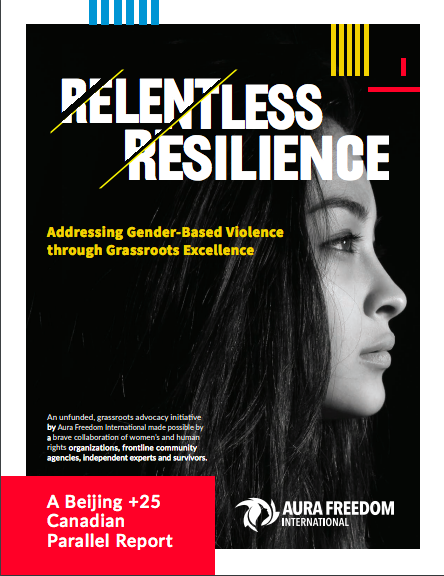
Relentless Resilience is a Beijing +25 Parallel Report that calls for holistic change to address the root causes of gender-based violence (gender inequity, systemic racism, colonialism, ableism, trans/homophobia, capitalism, etc.) and societal power imbalances that uphold the status quo. Through interviews with frontline social workers and survivor stories from grassroots organizations in the City of Toronto, Canada, this report will demonstrate how gender-based violence is impacting all 12 Areas of Critical Concern of the Beijing Declaration and Platform for Action and hindering the achievement of the UN Sustainable Development Goals. Relentless Resilience can be considered a point of reference for advocacy efforts that call for the eradication of gender-based violence throughout the entire year of Beijing +25, including CSW64 and the Generation Equality Forum taking place in Mexico and France in 2020 and beyond. Our guiding framework is rooted in human rights activism, grassroots excellence, trauma and, of course, resilience. This report aims to highlight the most marginalized women and girls in Canada and the resiliency of them in response to violence, oppression, and indifference.

post

page

attachment

revision

nav_menu_item

custom_css

customize_changeset

oembed_cache

user_request

wp_block

wp_template

wp_template_part

wp_global_styles

wp_navigation

wp_font_family

wp_font_face

acf-taxonomy

acf-post-type

acf-field-group

acf-field

ai1ec_event

exactmetrics_note

Respecting the Rights of Indigenous Peoples: A Due Diligence Checklist for Companies
Guidance

This Checklist seeks to provide companies with operational guidance on how to ensure due diligence when operating in areas where projects may affect indigenous peoples. Based on the United Nations Declaration on the Rights of Indigenous Peoples (UND...Read More

Sustainable fisheries and human rights: Opportunities to address the true cost of Thailand’s seafood
GuidancePublications

The fishing industry in Thailand fell under global scrutiny in 2014 for the significant human rights violations at sea. Personal stories of victims who had worked for years at sea with little food and constant physical abuse created enough global at...Read More

Ending forced labour by 2030: A review of policies and programmes
Guidance

The international community clearly faces an immense challenge in honouring the global commitment made in Target 8.7 of the Sustainable Development Goals to end all forms of forced labour by 2030 and to end the forced labour of children, along with ...Read More

Still Overlooked: Communities affected by jade mining operations in Myanmar, and the responsibilities of companies providing machinery.
Guidance

Myanmar is a high-risk environment from a business and human rights perspective. Pockets of the country constitute some of the most complex environments in the world; one example is the mineral rich Kachin state in the northern part of the country, ...Read More