
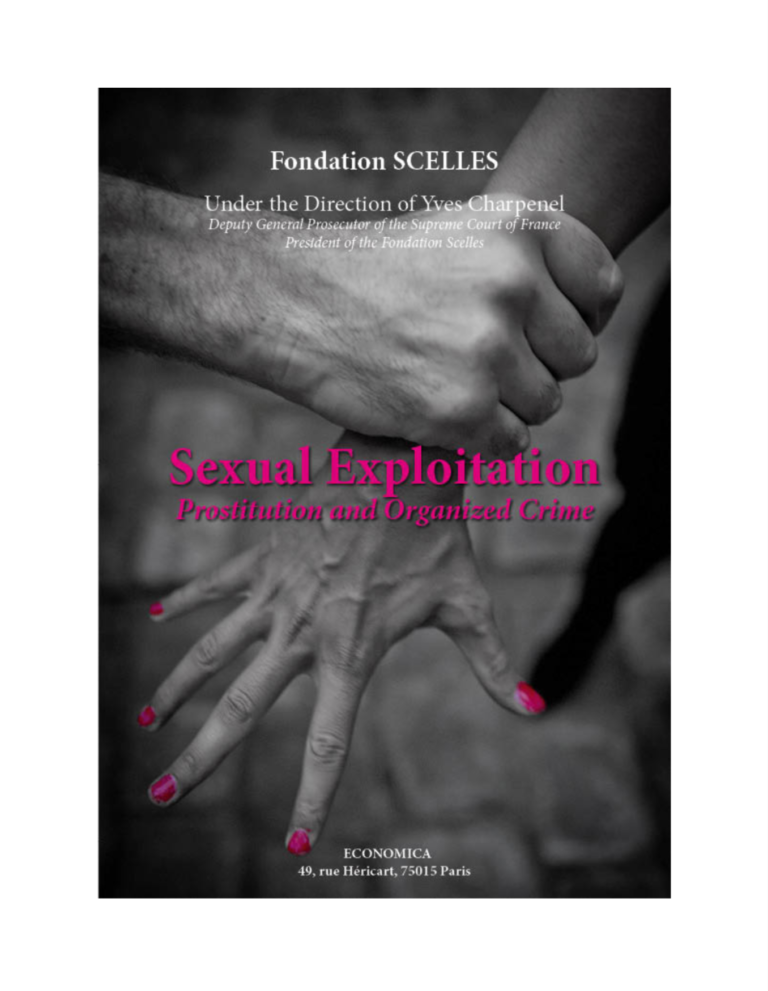
Prostitution is a multi-faceted phenomenon: victims of exploitation and networks, housewives in precarious situations, female students, children, men…who prostitute themselves in the streets, on the Web, in bars, in massage parlors, along the roads…

The situations are diverse. However, whatever the political, economic, or cultural contexts are, all of these situations relate to the same phenomenon: sexual exploitation. And from Paris to New York, from Kolkata to Marrakech, from Kiev to Bangkok, the same realities and the same threats are present.

Sexual Exploitation: Prostitution and Organized Crime DOWNLOAD

post

page

attachment

revision

nav_menu_item

custom_css

customize_changeset

oembed_cache

user_request

wp_block

wp_template

wp_template_part

wp_global_styles

wp_navigation

wp_font_family

wp_font_face

acf-taxonomy

acf-post-type

acf-field-group

acf-field

ai1ec_event

exactmetrics_note

The Global Business of Forced Labour: Report of Findings
Publications

This report presents the findings from the Global Business of Forced Labour project. The project investigates the business models of forced labour in global agricultural supply chains. Over two years the project systematically mapped the business ...Read More

Understanding and Responding to Modern Slavery within the Homelessness Sector
GuidancePublications

Homelessness organisations and anti-slavery organisations have both been aware of links between modern slavery and homelessness, yet there has been little research into how these issues overlap and impact on one another. An initial scoping exercise ...Read More

Addressing the Human Cost of Assam Tea: An Agenda for Change to Respect, Protect and Fulfill Human Rights on Assam Tea Plantations
Publications

Workers on tea plantations in the Assam region of India are systematically denied their rights to a living wage and decent working and living conditions. The fact that they are unable to meet their basic living costs is starkly illustrated by our fi...Read More

Corporate Human Rights Benchmark – 2018 Key Findings
Publications

The 2018 Corporate Human Rights Benchmark assesses 101 of the largest publicly traded companies in the world on a set of human rights indicators. The companies from 3 industries - Agricultural Products, Apparel, and Extractives - were chosen for the ...Read More