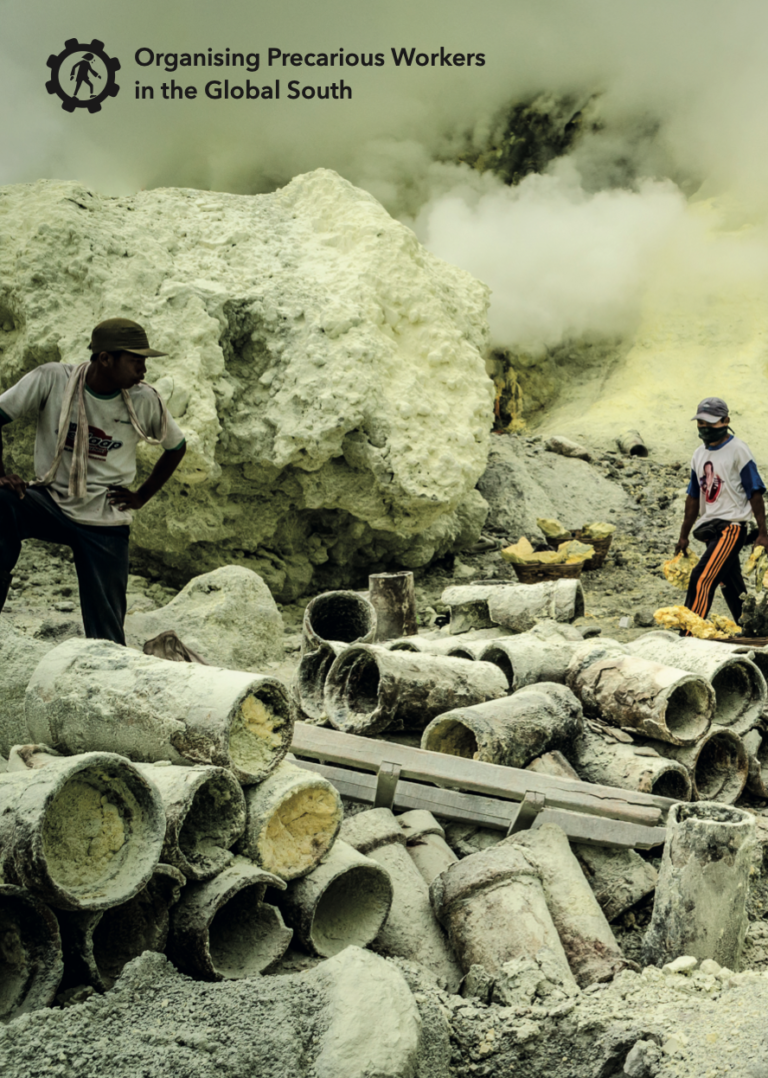
The workers of the world face numerous challenges. Many debates around the future of labour, such as the rise of the so called ‘gig economy’, tend to focus on experiences and trends within the Global North. The shortcomings of the present are often contrasted to a nostalgic view of the past, with an idealised ‘golden era’ defined by ‘standard employment contracts’ serving as the primary benchmark against which practices today are measured. Once work is defined in these terms, the primary focus becomes the ‘restoration’ of labour rights and protections that have been lost or eroded. The re-invention of a vibrant global labour movement will not occur through a vain attempt to put the clock back to a mythical ‘standard employment contract’. It is only through organising – recruiting, educating and mobilising – new members that labour can reinvent itself as a social movement.

Organising precarious workers in the Global South - Beyond Trafficking and Slavery & openDemocracy - October 2019 DOWNLOAD

post

page

attachment

revision

nav_menu_item

custom_css

customize_changeset

oembed_cache

user_request

wp_block

wp_template

wp_template_part

wp_global_styles

wp_navigation

wp_font_family

wp_font_face

acf-taxonomy

acf-post-type

acf-field-group

acf-field

ai1ec_event

exactmetrics_note

OECD-FAO Guidance for Responsible Agricultural Supply Chains
Guidance

The OECD-FAO Guidance for Responsible Agricultural Supply Chains (the Guidance) has been developed to help enterprises observe existing standards for responsible business conduct along agricultural supply chains. These standards include the OEC...Read More

OECD Due Diligence Guidance for Responsible Business Conduct
Guidance

Businesses can play a major role in contributing to economic, environmental and social progress, especially when they minimise the adverse impacts of their operations, supply chains and other business relationships. The OECD Guidelines for Multinatio...Read More

The Supply Chain Leadership Ladder – BSR, 2017
GuidanceGood Practices

Leading companies recognize that their global supply chains can be a key asset or a major risk, both in terms of the business value that they represent and their potential impacts on society and the environment. Companies want to gain visibility int...Read More

Review of the Nestlé Palm Oil Upstream Supply Chain Management Program in Malaysia and Indonesia
Guidance

In recent years, labour practices in the palm oil sector in Southeast Asia have drawn significant attention from both media and civil society actors. In June 2018, Nestlé began a partnership with Verité on a multiyear program to improve ...Read More