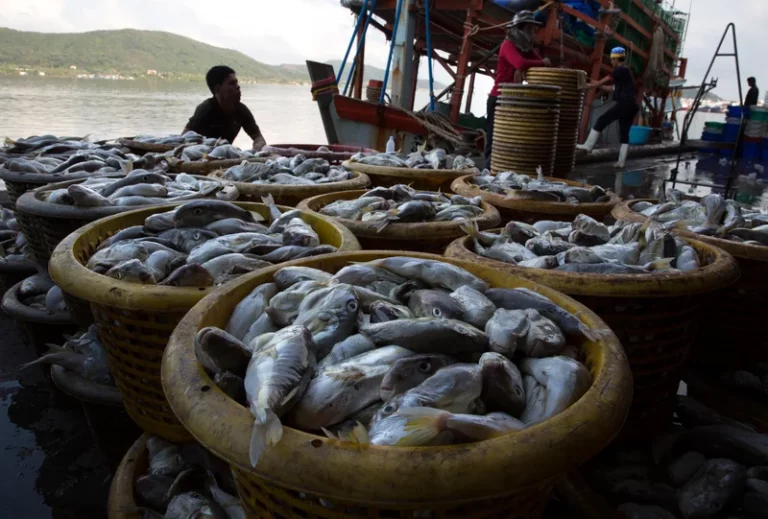
The NPR article highlights ongoing forced labor and human trafficking in the global seafood industry, especially in Thailand. In response, the Monterey Bay Aquarium’s Seafood Watch launched the Seafood Slavery Risk Tool to help retailers assess and address human rights risks in their supply chains. The tool rates fisheries by risk level but encourages engagement over boycotts to drive change. Despite past scandals, many companies still struggle with transparency and accountability. Experts stress that solving this issue requires joint efforts from businesses and governments.

post

page

attachment

revision

nav_menu_item

custom_css

customize_changeset

oembed_cache

user_request

wp_block

wp_template

wp_template_part

wp_global_styles

wp_navigation

wp_font_family

wp_font_face

acf-taxonomy

acf-post-type

acf-field-group

acf-field

ai1ec_event

exactmetrics_note

Modern Slavery PEC Impact Report for 2019-2022
News & AnalysisPublications

Slavery is a complex phenomenon and a pervasivescar on humanity. The control of another person, theexploitation of their body and labour, and the removalof their rights, is a degradation of all concerned. It isall too easy to see this as a problem o...Read More

TAGS:
Delta 8.7
Online ToolsVideos

Delta 8.7 is a global knowledge platform exploring what works to eradicate forced labour, modern slavery, human trafficking and child labour, an aim set out in Target 8.7 of the UN Sustainable Development Goals. On any given day in 2016, the latest y...Read More

TAGS: Global
A Snapshot of Social Protection Measures for Undocumented Migrants by National and Local Governments
News & AnalysisPublications

Across Europe, people live and work while having irregular migration status, economically, socially and culturally enriching their communities and countries of residence. Undocumented migrants contribute directly and indirectly to social protection ...Read More

TAGS: Global
83 Countries are More Ocean Than Land
Online Tools

The 1982 UN Law of the Sea was the largest ever annexation of our planet and our ocean. In one stroke, one-third of our planet was formally designated as 'exclusive economic zones', giving coastal countries rights to 200 miles of ocean around their ...Read More