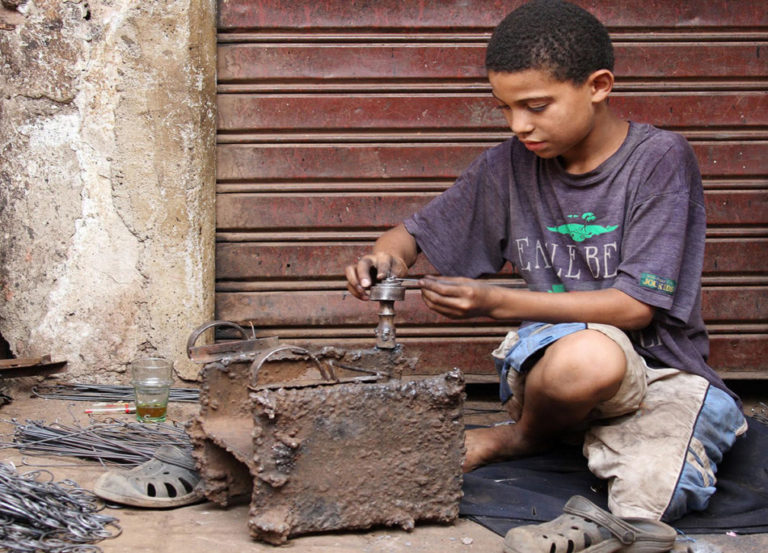
Extreme poverty and lack of livelihood opportunities result in some families sending their children to work on cocoa farms. It is reported that some children are ‘sold’ to traffickers or farm owners, paying for a determined duration of labour. Children as young as 10 years then work for 12-14 hours a day with few breaks, insufficient water and nutrition, forced to carry heavy bags of cocoa beans across long distances, and with exposure to pesticides and other hazardous agricultural chemicals without adequate protection. Almost every child on a cocoa farm will display scars and wounds from swinging the heavy-bladed machetes used to crop the plants.
To comply with international labour standards and norms, such as the ILO convention 138 on the Minimum Age for Employment and the ILO Convention 182 on the Worst Forms of Child Labour, multinational corporations need to ensure that their suppliers are not involved in human trafficking and/or forced labour of children and adults. Companies should further implement monitoring systems, transparent procurement policies, regular auditing activities and training of the supply chain managers on how to detect human trafficking/forced labour or any other irregular incidents.
This discussion gives lessons learned and emerging practices to eliminate child labour within supply chains. How has public policy impacted child labour practices? Can international labour standards and norms continued to be improved? How does culture and gender impact the practices of child labour?
In a series of interviews, videos and presentations, partners at the forefront of the fight against child labour shared their expectations and plans for the year.
Speakers:Mr Guy Ryder – ILO Director GeneralMs Henrietta Fore – UN...Read More
This virtual webinar, a side-event to the High-Level Political Forum, explored the role of sustainable finance in addressing modern slavery and human trafficking, with a particular focus on lessons learned from the COVID-19 era. Featuring keynote re...Read More
This video infographic outlines the main forms of violence which continue to affect women and children in Peru during the Covid-19 pandemic, including human trafficking and online sexual violence.
https://www.youtube.com/watch?v=d8t9TliWe4w
...Read More