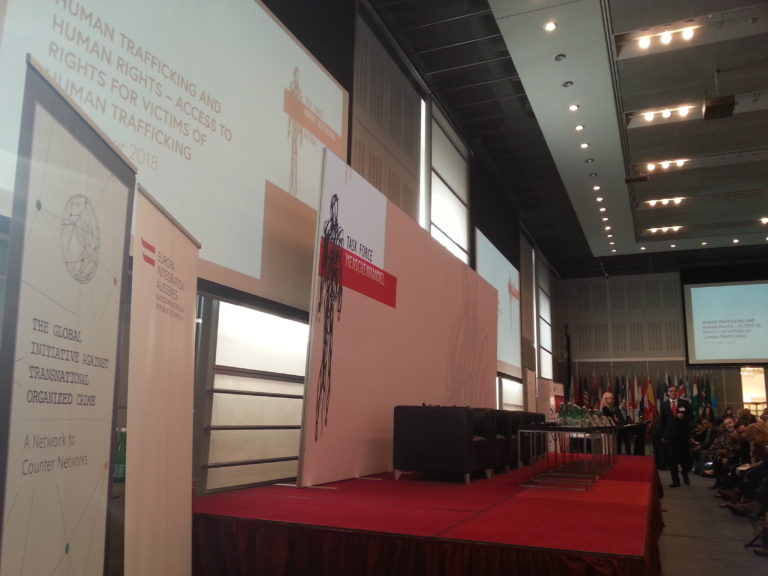
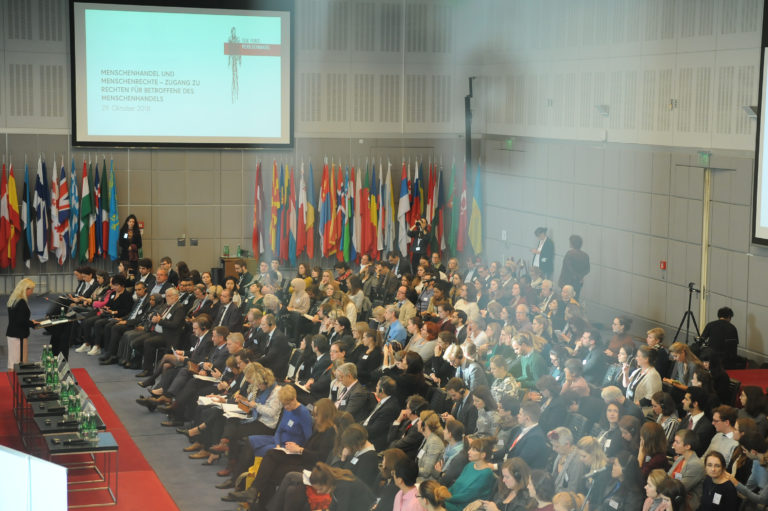
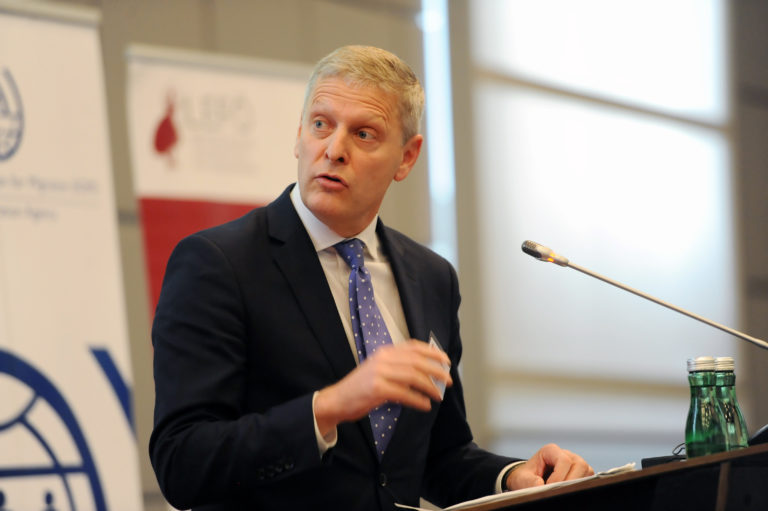
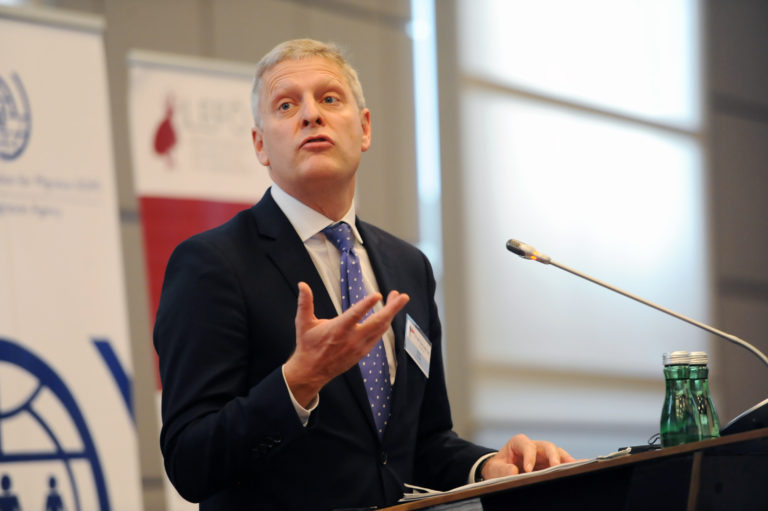
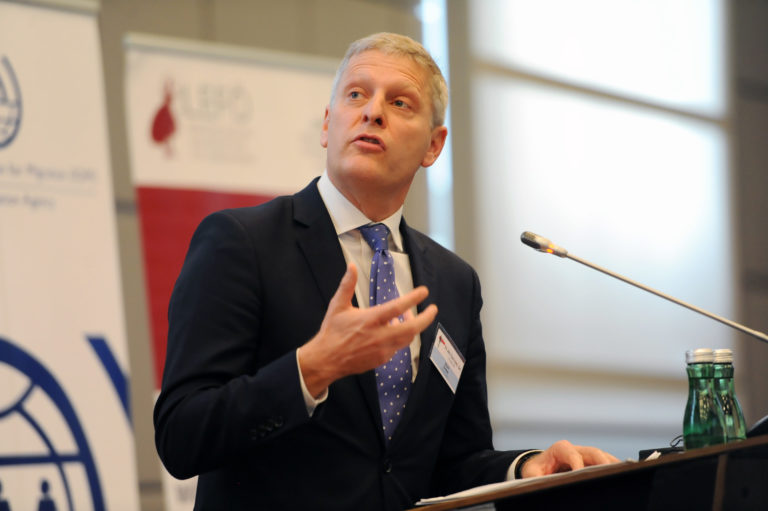
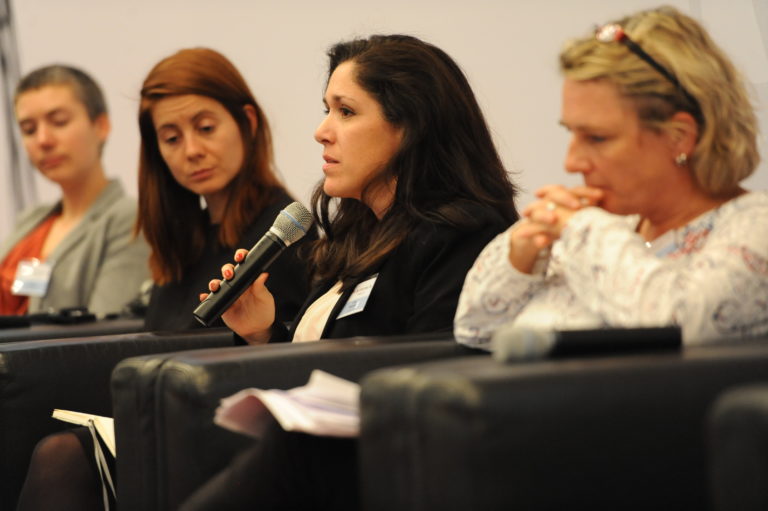
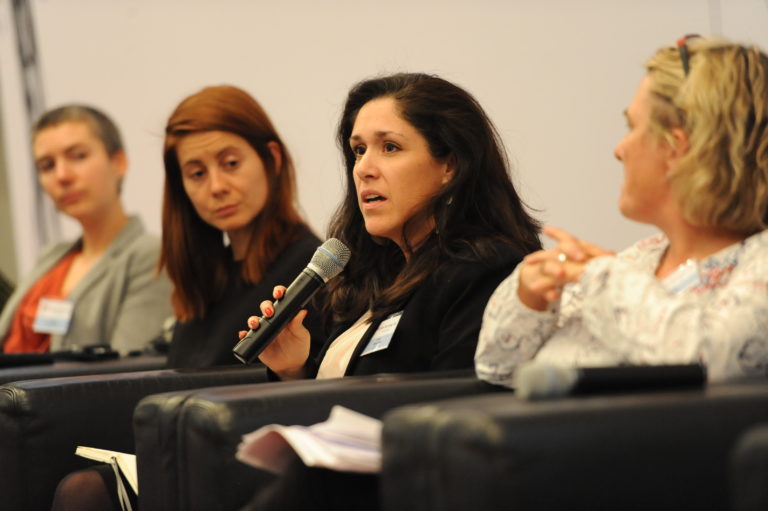
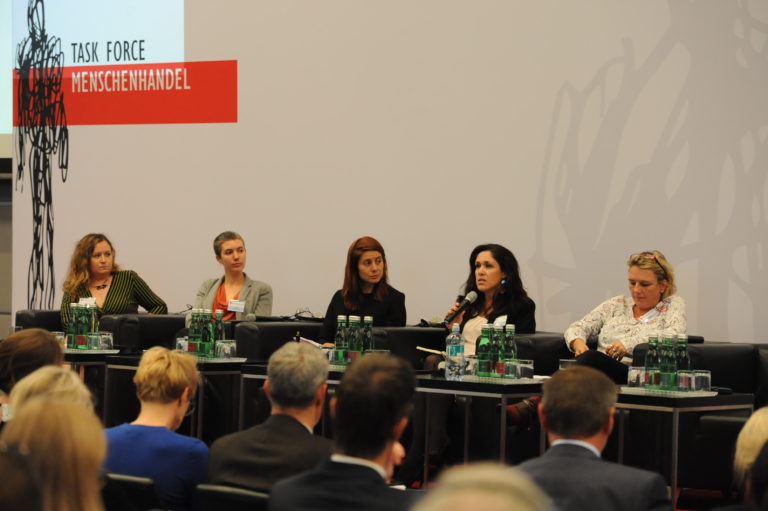
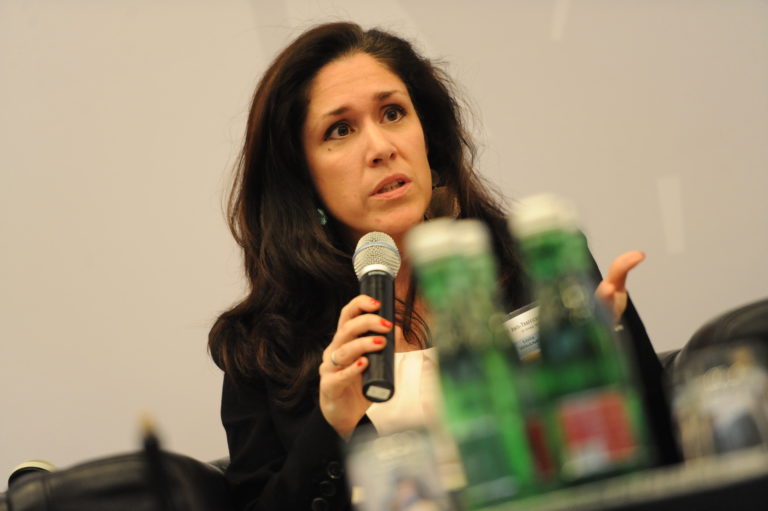
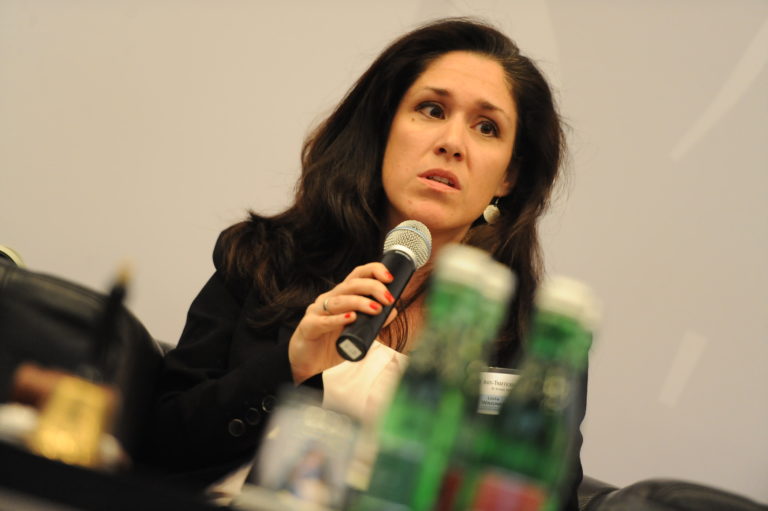
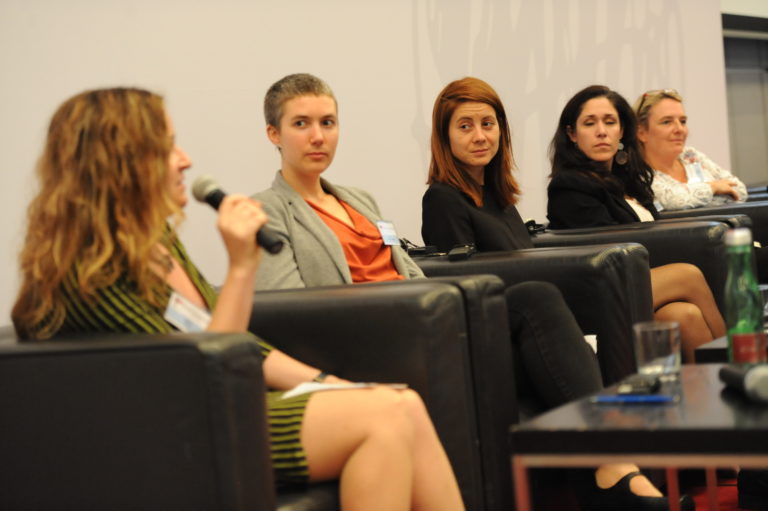
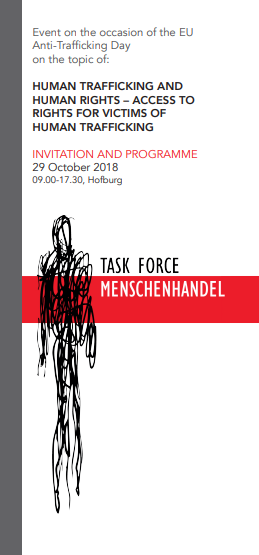
On the occasion of the EU Anti-Trafficking Day, one of the RESPECT founding organisations, the Global Initiative against Transnational Organized Crime co-organized a high-level conference on “Human Trafficking and Human Rights – Access to Rights for Victims of Human Trafficking” with the OSCE Office of the Special Representative and Co-ordinator for Combating Trafficking in Human Beings, the Austrian Task Force on Combating Human Trafficking, the Italian Chairmanship, the Vienna Institute for International Dialogue and Cooperation (VIDC), the International Organization of Migration (IOM) and the International Centre for Migration Policy Development (ICMPD).
Mark Shaw, the Global Initiative’s Director, chaired the first panel on “Access to Rights from National and International Perspectives” and Livia Wagner, our coordinator, organized the fourth workshop on “The Roles and Responsibilities of the Private Sector in the Fight against Human Trafficking“. The recordings of Panel I and concluding remarks of the workshops are available below (video credits: OSCE).
(Photos: Micky Kroell/OSCE)
EU Anti-Trafficking Day Conference Programme 2018 (German & English)DOWNLOAD
The U.S. prison system has been under increasing scrutiny in recent years for issues such as systemic racism, inhumane conditions, overcrowding, and sexual violence. While these issues are extremely pressing, another important issue, forced prison l...Read More
Men, women and children continue to be subjected to trafficking in human beings, as local, national and international statistics painfully illustrate. Human traffickers continue to act with impunity, as low global conviction rates sadly demonstrate. Yet given the nature of...
Over the course of the last five years, the People’s Republic of China (PRC) government has embarked on a campaign of repression that nine governments have determined to be either “genocide” or “crimes against humanity.” The PRC has furthe...Read More
Internet and communication technology (ICT) has led to the emergence and rapid expansion of technology-facilitated trafficking in human beings (THB). The misuse of technology has become central to the business model of human traffickers and is prese...Read More