
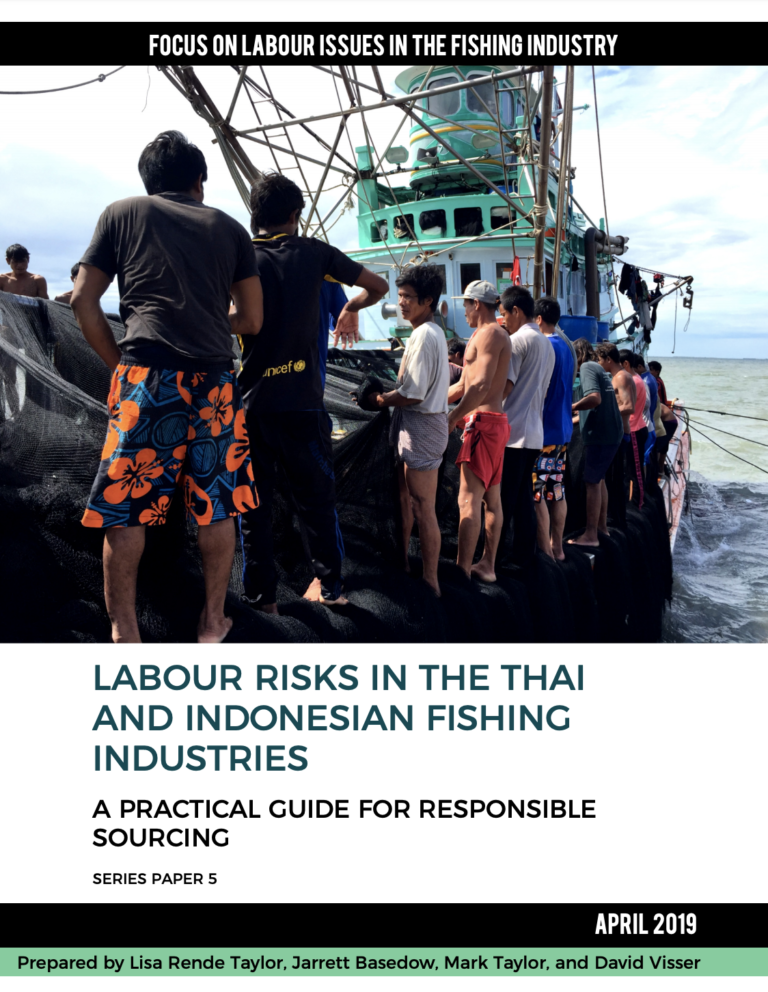
Prepared by Lisa Rende Taylor, Jarrett Basedow, Mark Taylor, and David Visser.

In collaboration with Coventry University, Issara contributed to Fish for Export: Working in the Wild Capture Seafood Industry in Indonesia and distilled additional fieldwork and learning in Thailand and Indonesia into this brief targeted at a responsible sourcing audience.

Labour Risks in the Thai and Indonesian Fishing Industries: A Practical Guide for Responsible Sourcing - Issara Institute, 2019 DOWNLOAD

post

page

attachment

revision

nav_menu_item

custom_css

customize_changeset

oembed_cache

user_request

wp_block

wp_template

wp_template_part

wp_global_styles

wp_navigation

wp_font_family

wp_font_face

acf-taxonomy

acf-post-type

acf-field-group

acf-field

ai1ec_event

exactmetrics_note

Guidance on responding to victims in forced scam labour
Guidance

In September 2022, HRC published a briefing addressing the emerging organised crime of victims systematically trafficked to scamming compounds in Southeast Asia. The briefing led to many inquiries from journalists and a subsequent growth in media co...Read More

TAGS:
Quality Standards for Reporting Lines for Child Sexual Exploitation in Travel and Tourism
GuidancePublications

These quality standards are a practical tool for the staff managing these reporting websites or wishing to create one. They cover several aspects, in particular: The checking of the background and the references of employeesThe processing of repo...Read More

Private Sector Engagement in Counter Trafficking Projects: Learning from Our Actions
Guidance

This Learning Paper Series was developed by the USAID Asia Counter Trafficking in Persons (CTIP) project with the overall aim to learn from our current and previous programming to better inform our future work. Winrock In- ternational is the im...Read More

Footsteps Forward Investors Against Slavery and Trafficking Asia Pacific Annual Report 2021–2022
Guidance

The authors are a group of investors working to help end modern slavery, which currently affects an estimated 40 million people globally, with 70% of that number estimated to be in the Asia-Pacific region. IAST APAC was established in 2020, based on...Read More

TAGS: Asia