
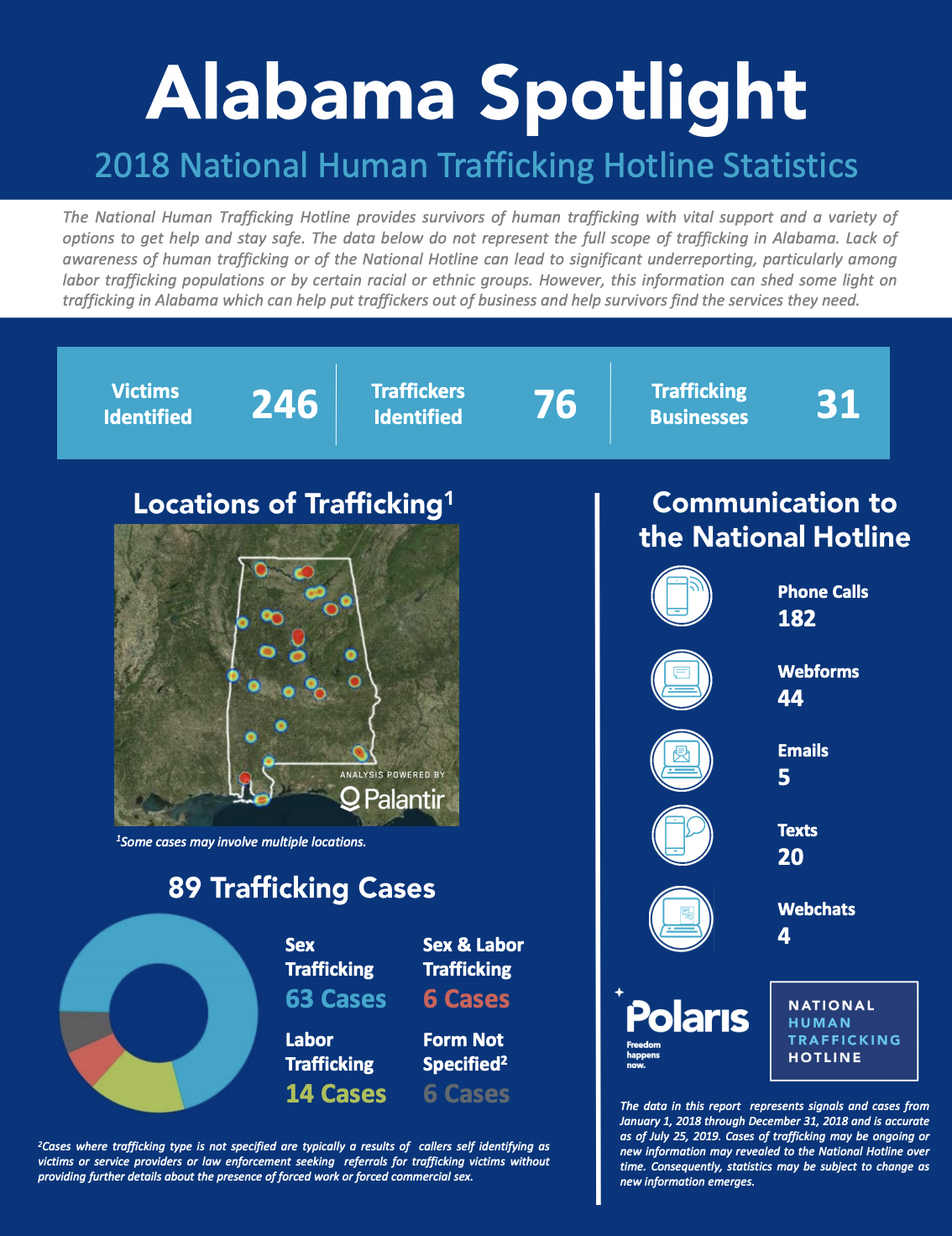
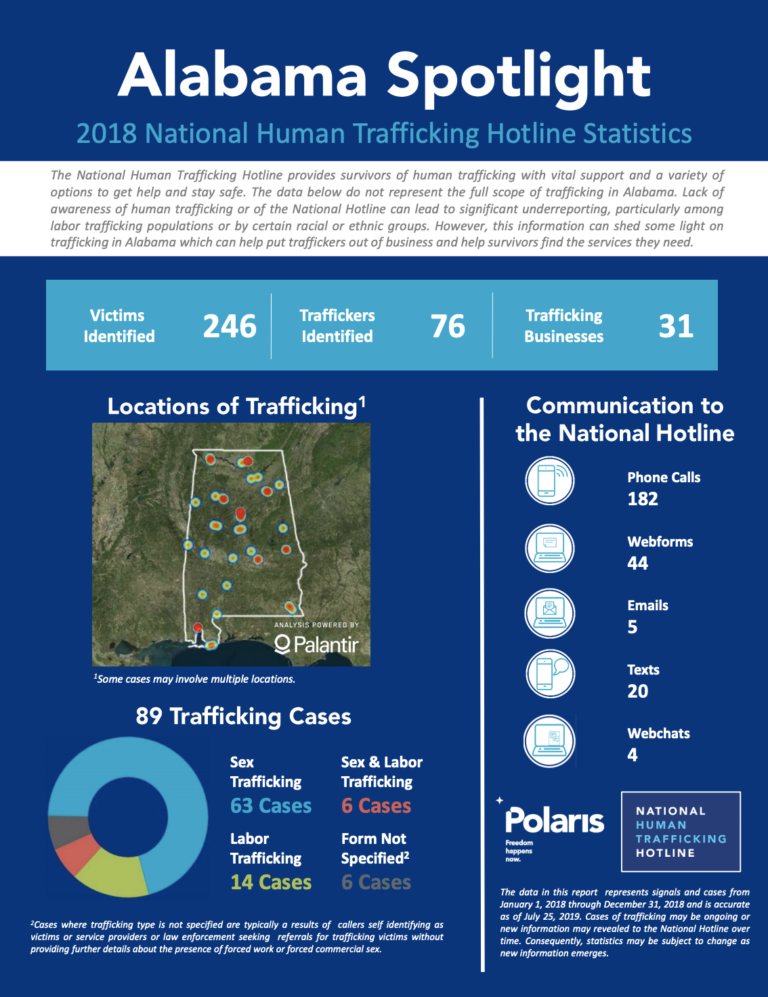
The data in this report represents signals and cases from January 1, 2018 through December 31, 2018 and is accurate as of July 25, 2019. Cases of trafficking may be ongoing or new information may revealed to the National Hotline over time. Consequently, statistics may be subject to change as new information emerges.

You can download the report infographic below.

National Hotline 2018 Alabama State Report - National Human Trafficking Hotline, 2019 DOWNLOAD

post

page

attachment

revision

nav_menu_item

custom_css

customize_changeset

oembed_cache

user_request

wp_block

wp_template

wp_template_part

wp_global_styles

wp_navigation

wp_font_family

wp_font_face

acf-taxonomy

acf-post-type

acf-field-group

acf-field

ai1ec_event

exactmetrics_note

COVID-19 and Modern Slavery: A Research Response
COVID-19 resourcesPublications

COVID-19 represents a large and sudden exogenous shock to the world. The pandemic itself and the measures being undertaken to slow its pace and effect have short, medium, and long-term impacts on the problem of modern slavery. We have formulated res...Read More

Worker feedback technologies and combatting modern slavery in global supply chains
Publications

Examining the effectiveness of remediation-oriented and due-diligence-oriented technologies in identifying and addressing forced labour and human trafficking. The global proliferation of mobile-phone-based technologies in countries producing good...Read More

What works to prevent violence against children online?
Publications

The report, What works to prevent online violence against children, presents ways to address the growing worldwide concern of keeping children safe online, with a specific focus on two forms of online violence: child sexual abuse including groo...Read More

TAGS:
Action against child labour in Lebanon: A mapping of policy and normative initiatives
Publications

The ILO commissioned this report from Ms. Hayat Osseiran, an independent researcher on child labour issues. The report should not be construed as representing the views of the ILO. The views expressed are those of the author and do not necessarily ...Read More