
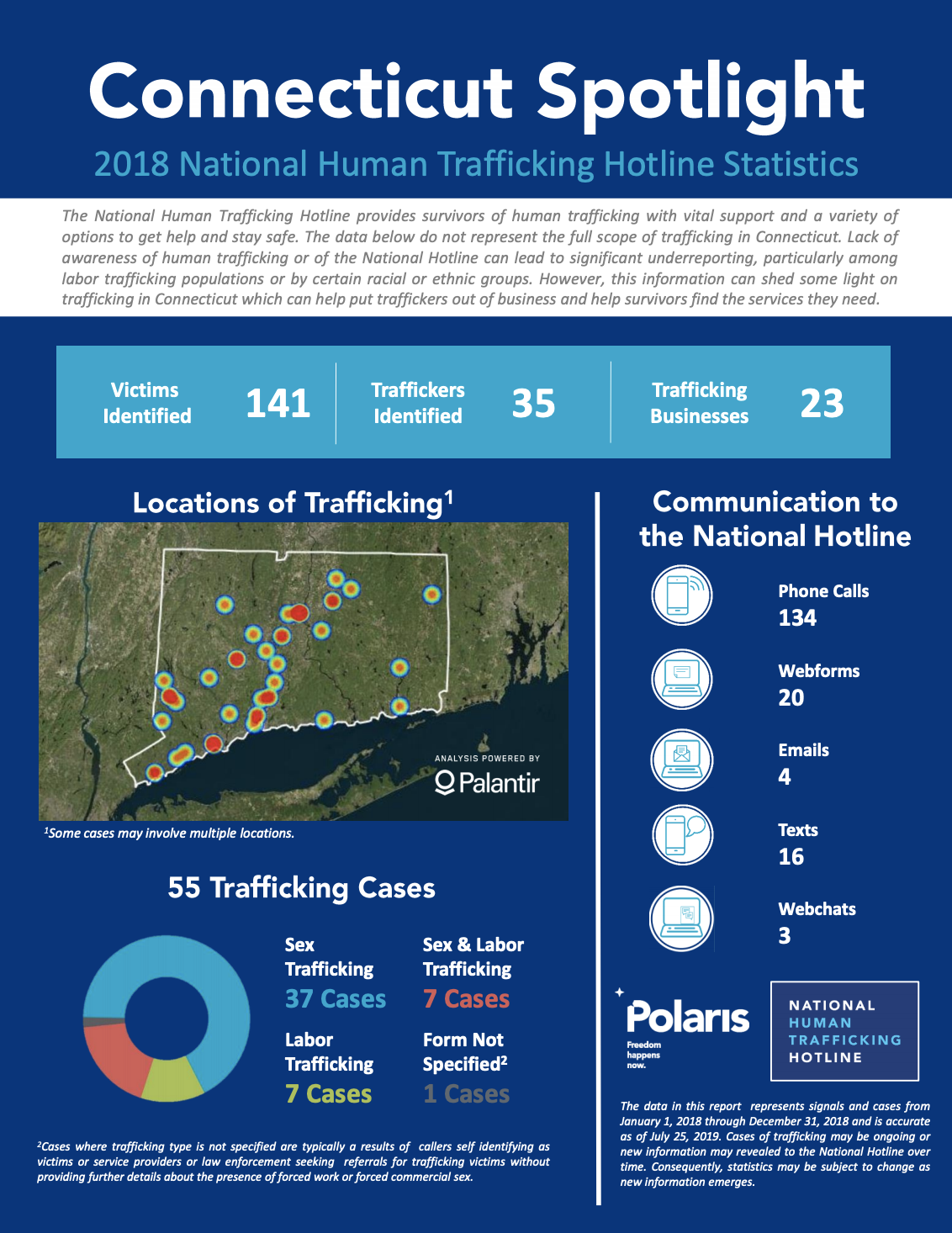
The data in this report represents signals and cases from January 1, 2018 through December 31, 2018 and is accurate as of July 25, 2019. Cases of trafficking may be ongoing or new information may revealed to the National Hotline over time. Consequently, statistics may be subject to change as new information emerges.

You can download the report infographic below.

National Hotline 2018 Connecticut State Report - National Human Trafficking Hotline, 2019 DOWNLOAD

post

page

attachment

revision

nav_menu_item

custom_css

customize_changeset

oembed_cache

user_request

wp_block

wp_template

wp_template_part

wp_global_styles

wp_navigation

wp_font_family

wp_font_face

acf-taxonomy

acf-post-type

acf-field-group

acf-field

ai1ec_event

exactmetrics_note

Trafficking in Persons Report 2023
Publications

Based on the theme of partnership, this year’s report examines the ways in which governments and other stakeholders have collaborated to advance anti-trafficking priorities and goals, and emphasizes the importance of including a breadth of groups ...Read More

TAGS: Global
Worked to Debt: Over Indebtedness In Cambodia’s Garment Sector
COVID-19 resourcesPublications

Tens of thousands of garment workers in Cambodia will struggle to repay microfinance debts during work stoppages and factory suspensions caused by COVID-19, creating a mounting human rights crisis as they struggle to feed their families and hold ont...Read More

Four Monitoring Report – Monitoring and evaluation of laws and policies for action against human trafficking and their Implementation in the Republic of North Macedonia
Publications

This report is based on the Monitoring and Evaluation of Anti-trafficking Policies: A Handbook for Victims’ Advocates (hereafter: the Handbook) developed in 2016. The Handbook was designed with the idea to enable monitoring of national anti-traffi...Read More

TAGS: Europe
Wage Theft and Pandemic Profits: The Right to a Living Wage for Garment Workers
Publications

As stores closed around the world in response to COVID-19 lockdowns in early 2020, fashion brands and retailers sought to minimize their losses, shifting the financial burden of the disruption to the bottom of their supply chain. Cancelled orders, d...Read More