
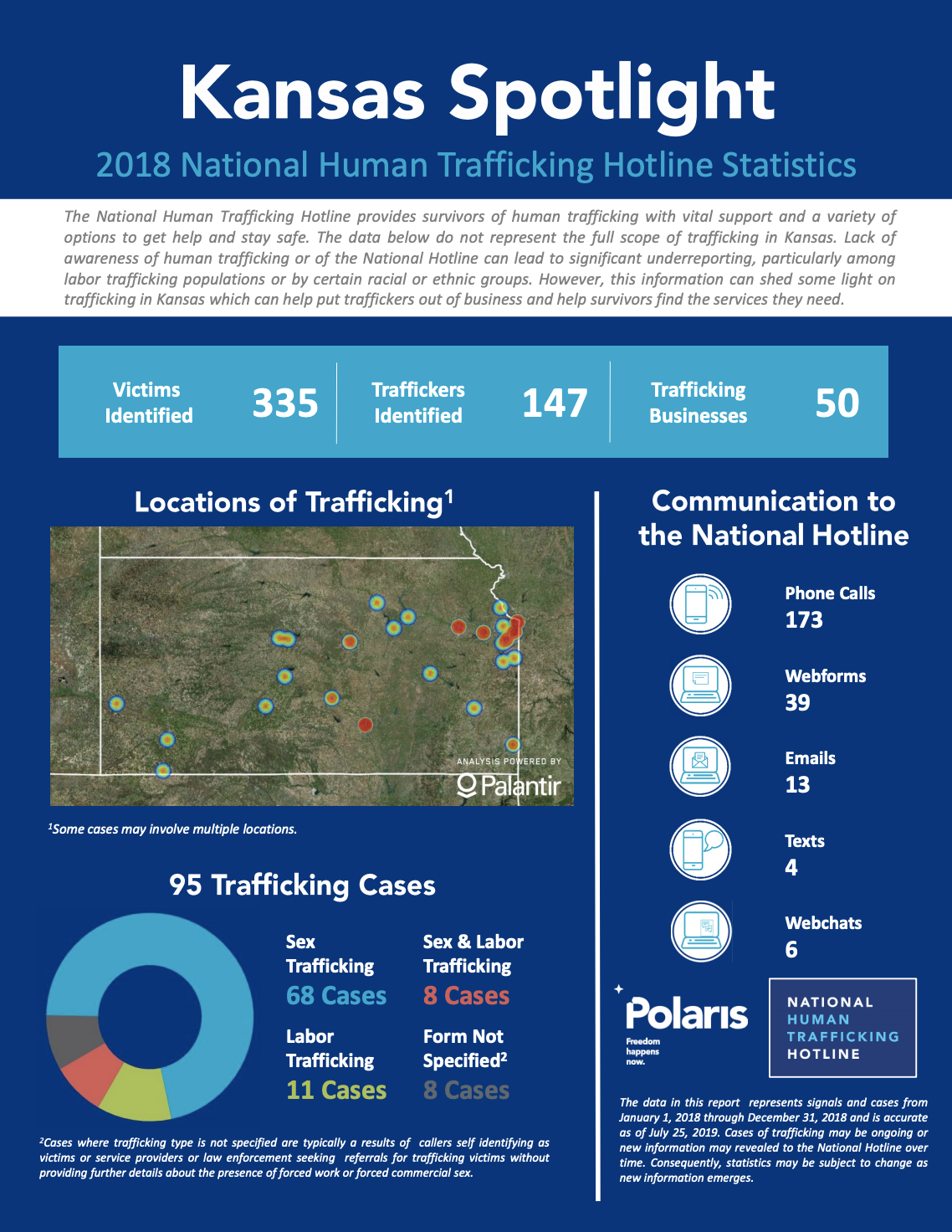
The data in this report represents signals and cases from January 1, 2018 through December 31, 2018 and is accurate as of July 25, 2019. Cases of trafficking may be ongoing or new information may revealed to the National Hotline over time. Consequently, statistics may be subject to change as new information emerges.

You can download the report infographic below.

National Hotline 2018 Kansas State Report - National Human Trafficking Hotline, 2019 DOWNLOAD

post

page

attachment

revision

nav_menu_item

custom_css

customize_changeset

oembed_cache

user_request

wp_block

wp_template

wp_template_part

wp_global_styles

wp_navigation

wp_font_family

wp_font_face

acf-taxonomy

acf-post-type

acf-field-group

acf-field

ai1ec_event

exactmetrics_note

Parallel societies: slavery, exploitation and criminal subculture in Leicester
Publications

COVID-19 has put under the spotlight the fast fashion industry in Leicester East, and its exploitation of thousands of (mostly immigrant) workers. Exploitation that ranges from unsafe working conditions through to slavery; from staff being paid belo...Read More

Responsibility Outsourced: Social Audits, Workplace Certification and Twenty Years of Failure to Protect Worker Rights
Publications

The failure of governments to protect workers’ rights in the global economy has left a yawning gap of regulation and helped spawn an $80 billion industry in corporate social responsibility (CSR) and social auditing. Yet the experience of the last ...Read More

An Alternative Anti-Trafficking Action Plan: A Proposed Model Based on a Labor Approach to Trafficking
Publications

TraffLab’s Alternative Anti-Trafficking Action Plan (the “Alternative Plan”) provides a labor-based alternative approach to the new Israeli national plan to address human trafficking 2019-2024, published by the Ministry of Justice in January 2...Read More

Human Trafficking: What Disaster Responders Need to Know
GuidanceGraphics & Infographics

Studies have shown that even outside of a disaster context, approximately 50% of individuals who have been trafficked saw a health professional while being trafficked. However, first responders are rarely trained to recognize these patients, despite...Read More