
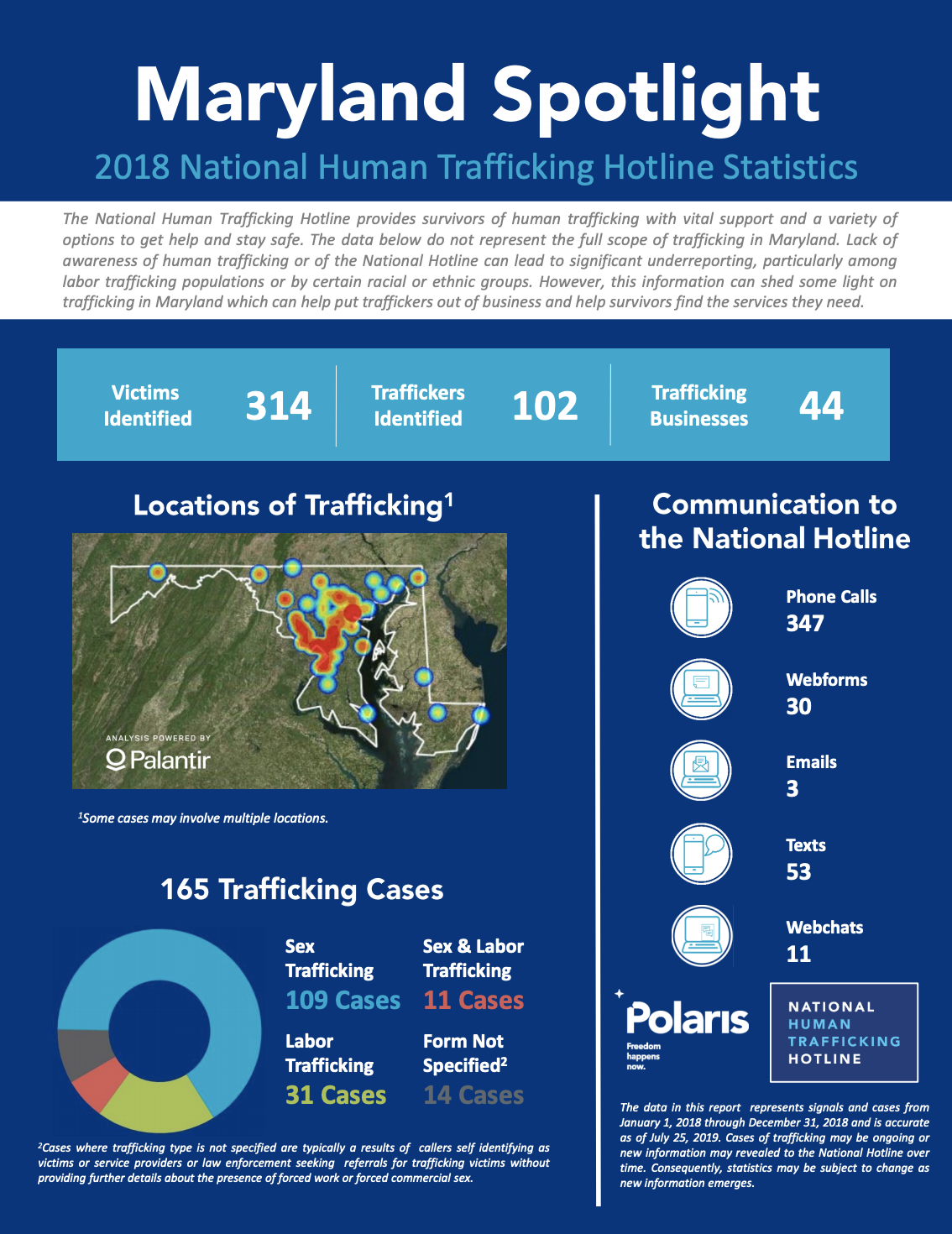
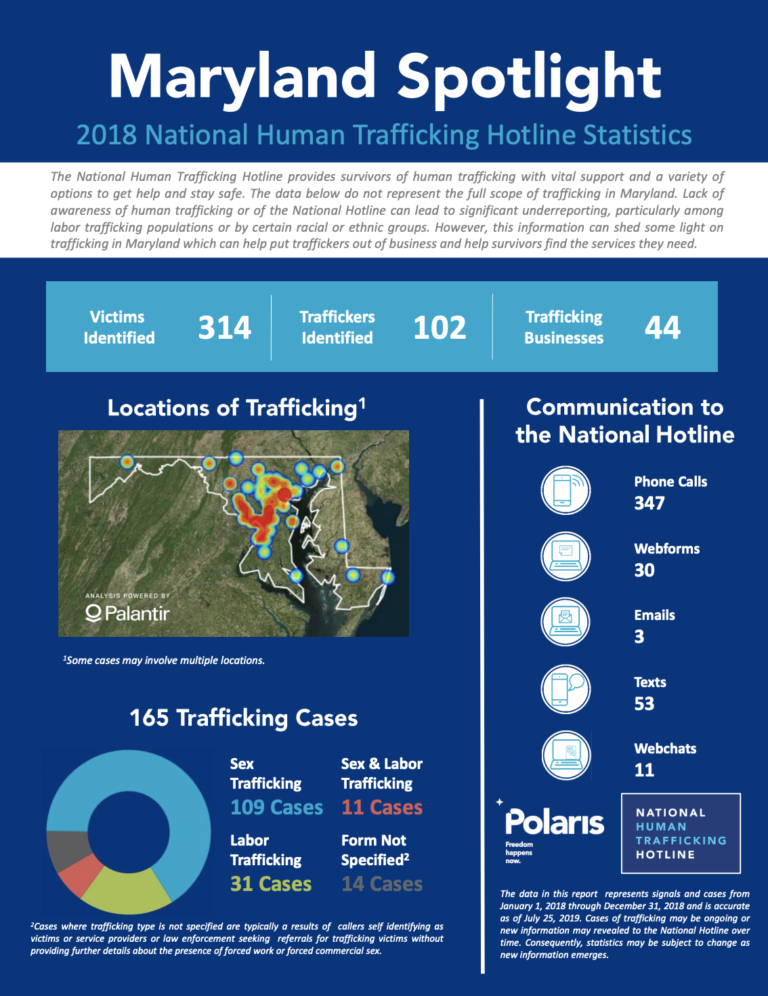
The data in this report represents signals and cases from January 1, 2018 through December 31, 2018 and is accurate as of July 25, 2019. Cases of trafficking may be ongoing or new information may revealed to the National Hotline over time. Consequently, statistics may be subject to change as new information emerges.

You can download the infographic report below.

National Hotline 2018 Maryland State Report - National Human Trafficking Hotline, 2019 DOWNLOAD

post

page

attachment

revision

nav_menu_item

custom_css

customize_changeset

oembed_cache

user_request

wp_block

wp_template

wp_template_part

wp_global_styles

wp_navigation

wp_font_family

wp_font_face

acf-taxonomy

acf-post-type

acf-field-group

acf-field

ai1ec_event

exactmetrics_note

From the Tiger to the Crocodile: Abuse of Migrant Workers in Thailand
Publications

The thousands of migrant workers from Burma, Cambodia, and Laos who cross the border into Thailand each year trade near-certain poverty at home for the possibility of relative prosperity abroad. While most of these bids for a better life do not end ...Read More

Eliminating child labour in fisheries and aquaculture – Promoting decent work and sustainable fish value chains
Publications

Worldwide, the majority of child labour is concentrated in the agricultural sector, including fisheries and aquaculture. This brief provides an overview of children’s engagement in child labour in fisheries and aquaculture, the risks they are ex...Read More

Parallel societies: slavery, exploitation and criminal subculture in Leicester
Publications

COVID-19 has put under the spotlight the fast fashion industry in Leicester East, and its exploitation of thousands of (mostly immigrant) workers. Exploitation that ranges from unsafe working conditions through to slavery; from staff being paid belo...Read More

The Prevalence of Domestic Servitude among Child Domestic Workers in Addis Ababa, Ethiopia: Research Findings
News & AnalysisPublications

It is estimated that there are 17.2 million child domestic workers globally, most of whom are girls (International Labor Organization (ILO), 2013; ILO, n.d.). Despite their large numbers, research related to this marginalised group is extremely limi...Read More