By Remco E. Breuker & Imke van Gardingen

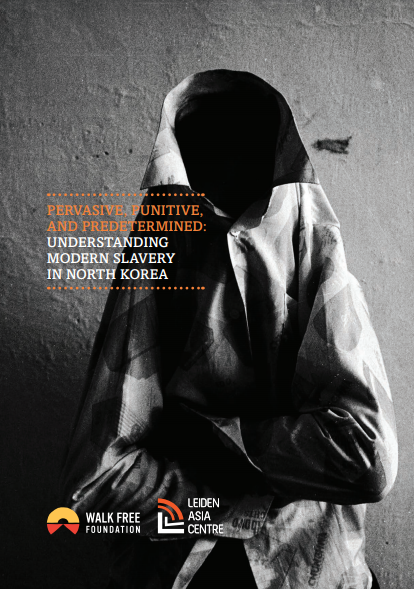
It has long been known, though difficult to verify, that citizens of North Korea are forced to work by the State on a far greater scale than seen elsewhere in the world. Recent estimates reveal that 1 in 10 North Koreans are living in modern slavery with the vast majority being forced to work by the state. While these estimates shed light on the scale of this crime, a more nuanced understanding of modern slavery in North Korea and the conditions that give rise to it, is required. The purpose of this study is to shed light on the hidden reality that is forced labour and other forms of modern slavery inside North Korea. Because it is not possible to directly survey or otherwise undertake data collection within North Korea, the study methodology involved conducting qualitative interviews with defectors from North Korea living in South Korea.

Pervasive, punitive, and predetermined: Understanding modern slavery in North Korea - Walk Free Foundation & Leiden University, 2018 DOWNLOAD

post

page

attachment

revision

nav_menu_item

custom_css

customize_changeset

oembed_cache

user_request

wp_block

wp_template

wp_template_part

wp_global_styles

wp_navigation

wp_font_family

wp_font_face

acf-taxonomy

acf-post-type

acf-field-group

acf-field

ai1ec_event

exactmetrics_note

United States Advisory Council on Human Trafficking Annual Report 2022
GuidancePublications

This report is about sharing topics that draw from the author's personal and professional experiences that they, as a Council, believe are important to effectively address human trafficking today. This report reflects the passion of those with lived...Read More

Developing Freedom: The Sustainable Development Case for Ending Modern Slavery, Forced Labour and Human Trafficking
Publications

40.3 million people – around 1 in every 185 people alive – experienced modern slavery or forced labour in 2016. States have committed to take immediate and effective measures to end modern slavery, forced labour and human trafficking by 2030, an...Read More

An Exploratory Study on the Role of Corruption in International Labor Migration
Publications

In this targeted, exploratory research project, Verité examined three illustrative transnational migrant worker recruitment corridors – Nepal to Qatar, Myanmar to Malaysia, and Myanmar to Thailand – to identify the points in the recruitment pro...Read More

National Referral Mechanism on Identifying and Working with Potential Victims of Child Trafficking
GuidancePublications

Since its establishment in 2007, the Working Group on Child Trafficking as a sub-group of the Task Force on Combating Human Trafficking has been working to gather background information on the phenomenon of child trafficking in Austria through the e...Read More