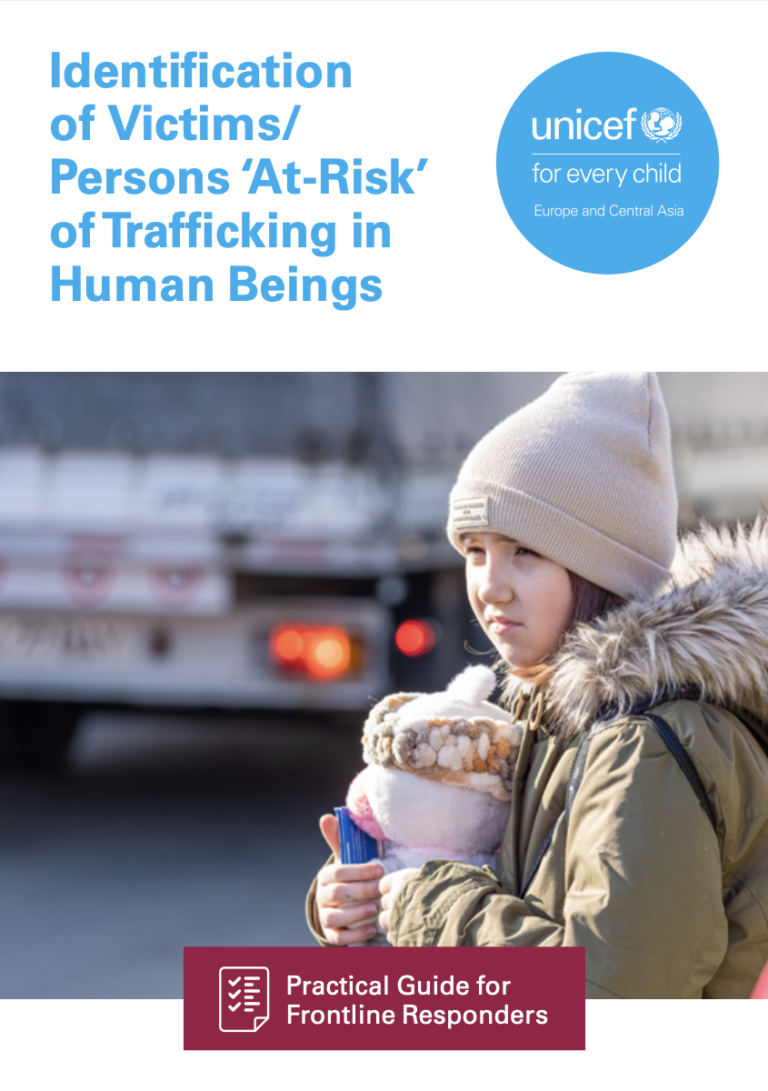
The Ukrainian crisis has generated an unprecedented and large-scale refugee movement leading to millions, primarily women and children, seeking safety in neighbouring and surrounding countries. While undertaking their journeys or upon reaching a destination, children seeking refuge can be exposed to numerous risks, including increased vulnerability to trafficking. Preventative and protective actions in response to these risks are critical for UNICEF and have led to the operationalization of numerous initiatives to provide training and guidance.
The Practical Guide on Identification of Victims/Persons ‘At-Risk’ of Trafficking in Human Beings for frontline responders aims to provide basic information to those most likely to encounter trafficked persons/ those ‘at-risk’ of trafficking and to support the difficult task of identifying cases of trafficking in human beings. The Practical Guide was developed based on the materials and information provided to frontline responders as part of trainings organized following the onset of the Ukraine crisis in Slovakia and Moldova.
The Guide provides simple guidelines on the screening and identification of trafficked victims and at-risk persons, including specific indicators on child trafficking and information on child-friendly communication. It is a practical and multi-functional tool for frontline responders, a concise guide for child-friendly communication with concrete techniques and facilitators, and can serve as training material on the identification of trafficked victims.
This Practical Guide can be shared and used by relevant stakeholders to promote anti-trafficking technical expertise at the frontline in all countries involved in the Ukraine emergency response and beyond. In order to promote the use this resource at national level, it is being contextualized with national legal frameworks and resources and translated into local languages (e.g. for Slovakia and Moldova).