
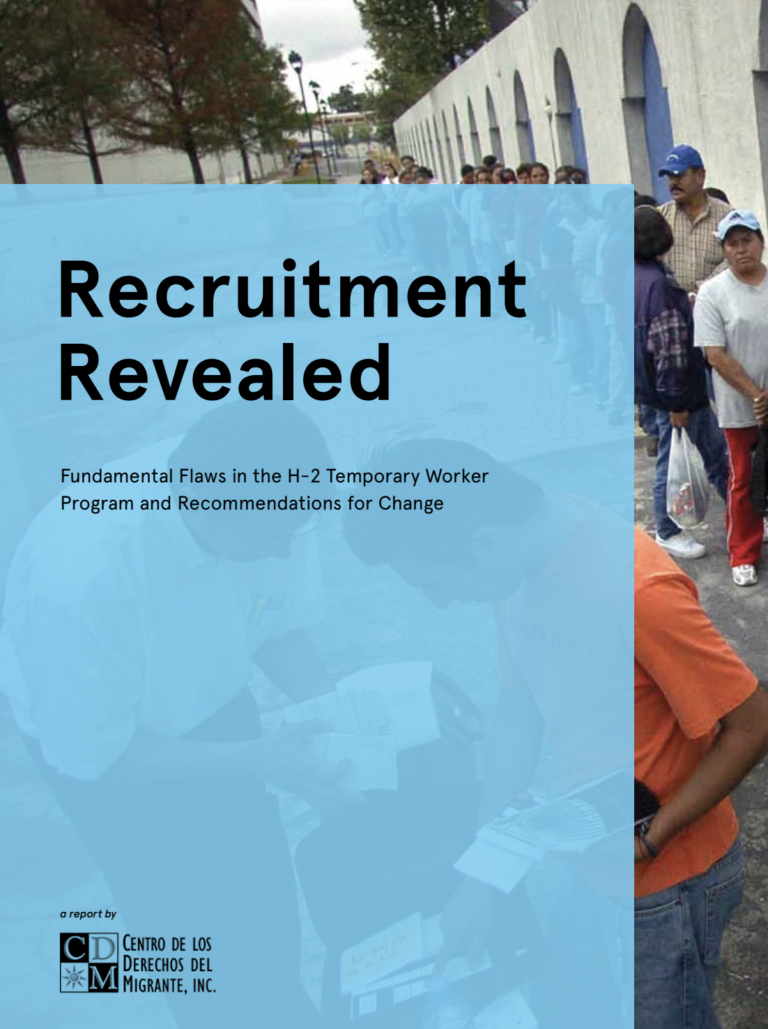
This report reveals the reality of international labor recruitment for low-wage, temporary jobs in the United States, examining recruitment in Mexico, home to the largest number of temporary migrants who labor under H-2 visas in the U.S. The findings are based on data gathered by Centro de los Derechos Migrante, Inc., (CDM) through a groundbreaking survey and lengthy interviews of hundreds of H-2 workers.

Recruitment Revealed: Fundamental Flaws in the H-2 Temporary Worker Program and Recommendations for Change DOWNLOAD

post

page

attachment

revision

nav_menu_item

custom_css

customize_changeset

oembed_cache

user_request

wp_block

wp_template

wp_template_part

wp_global_styles

wp_navigation

wp_font_family

wp_font_face

acf-taxonomy

acf-post-type

acf-field-group

acf-field

ai1ec_event

exactmetrics_note

From Local to Global: Building a strategic litigation ecosystem to address modern slavery in supply chains
Guidance

This briefing summarises the outcomes of the scopingresearch conducted by The Remedy Project, offeringan insight into the existing corporate accountabilitylegal landscape in South East Asia, and the barrierspreventing local groups from engaging in t...Read More

Business and human rights: Navigating a changing legal landscape
Guidance

Businesses are increasingly required to implement human rights due diligence process and/or to report on how they manage human rights-related issues. In our third joint briefing, the global business initiative on human rights and Clifford Chance con...Read More

Addressing Forced Labor and other Modern Slavery Risks: A Toolkit for Small and Medium-Sized Suppliers
GuidanceGraphics & Infographics

This toolkit aims to help companies that work in corporate supply chains to quickly identify areas of their business which carry the highest risk of modern slavery and develop a simple plan to prevent and address any identified risks. It is designed...Read More

Combating Forced and Child Labor of Refugees in Global Supply Chains: The Role of Responsible Sourcing
GuidancePublications

With the global refugee crisis showing no signs of abating, multinational companies need to consider how their supply chain interacts with refugees, who are often more vulnerable to forced labor when they seek out work in a new country. Combating F...Read More