
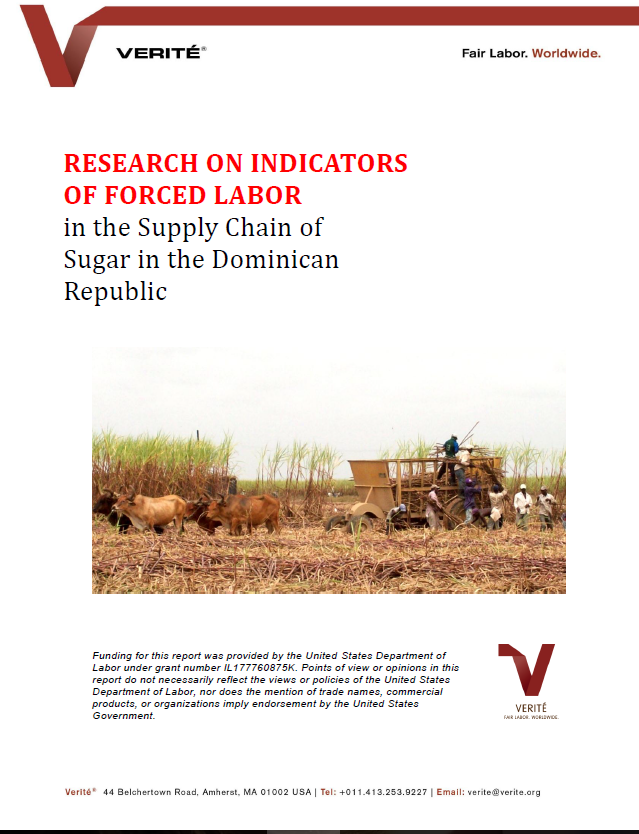
Verité carried out research on the presence of indicators of forced labour in the production of goods in seven countries from 2009 through 2011. This report is based on research on the presence of indicators of forced labour in the Dominican sugar sector.

post

page

attachment

revision

nav_menu_item

custom_css

customize_changeset

oembed_cache

user_request

wp_block

wp_template

wp_template_part

wp_global_styles

wp_navigation

wp_font_family

wp_font_face

acf-taxonomy

acf-post-type

acf-field-group

acf-field

ai1ec_event

exactmetrics_note

Using SAS® Text Analytics to Assess International Human Trafficking Patterns
Good PracticesPublications

By Tom Sabo, Adam Pilz, SAS Institute Inc. Abstract  The US Department of State (DOS) and other humanitarian agencies have a vested interest in assessing and preventing human trafficking in its many forms. A subdivision within the DOS releases pub...Read More

Deadly Secrets: How Apparel Brands Cover up Safety Hazards
Publications

For many years the dirty secret of the steadily growing Bangladeshi garment industry has been its underpaid workers, treated as disposable objects. The lowest paid garment workers anywhere in the world, hundreds of them have died in preventable fact...Read More

THE CONCEPT OF ‘EXPLOITATION’ IN THE TRAFFICKING IN PERSONS PROTOCOL
Publications

Article 3(a) of the United Nations Protocol to Prevent, Suppress and Punish Trafficking in Persons, Especially Women and Children, supplementing the United Nations Convention against Transnational Organized Crime (Trafficking in Persons Protocol) de...Read More

TAGS:
Pirates and Slaves: How Overfishing in Thailand Fuels Human Trafficking and the Plundering of Our Oceans
GuidancePublications

This report calls for overfishing, pirate fishing and modern-day slavery in the Thai fishing industry to be addressed as interconnected issues. It examines the complex and multi-faceted problems in Thailand’s fisheries sector and offers recommenda...Read More