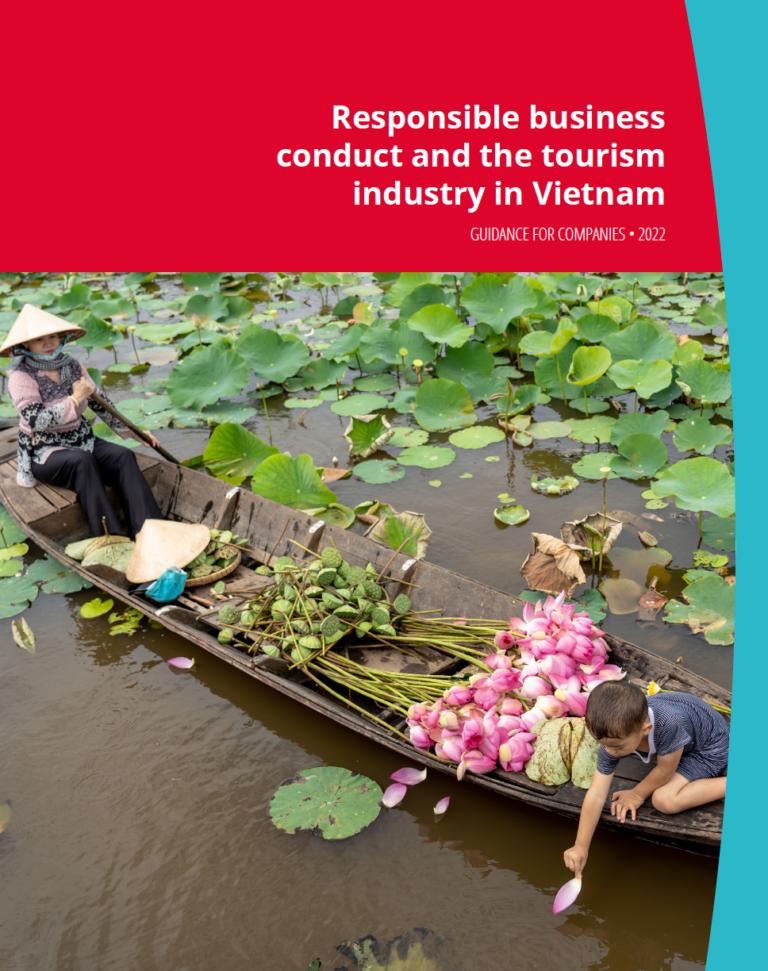
As Vietnam’s tourism industry expands, the Australian Human Rights Commission and the Vietnam Chamber of Commerce and Industry have partnered to produce guidance for companies operating in the tourism industry in Vietnam. The guidance aims to strengthen business capability and equip future business leaders to promote responsible business conduct and respect for human rights in Vietnam.

Tourism plays an important role in Vietnam’s economy by creating jobs, infrastructure, and market opportunities. It can also assist in fostering greater mutual understanding across cultures, regions and nations. However, the tourism sector can also create significant challenges for the promotion, protection and realisation of human rights. A range of human rights risks exist for workers, local communities and tourists interacting with the tourism industry. This guidance seeks to support business to navigate these challenges in a responsible and sustainable manner by assisting them to understand the key human rights challenges in the tourism industry and how to respond appropriately.

Responsible Business Conduct and the Tourism Industry in Vietnam: Guidance for Companies - Australian Human Rights Commission, 2022 DOWNLOAD

post

page

attachment

revision

nav_menu_item

custom_css

customize_changeset

oembed_cache

user_request

wp_block

wp_template

wp_template_part

wp_global_styles

wp_navigation

wp_font_family

wp_font_face

acf-taxonomy

acf-post-type

acf-field-group

acf-field

ai1ec_event

exactmetrics_note

Developing and Monitoring National Anti-Trafficking Response: A Practitioner’s Guide
Guidance

This Guide integrates ICMPD’s experience of advising and supporting governments in their anti-trafficking efforts in the past fifteen years from many other regions across the world – from Brazil to West Africa, Middle East and the Caucasus. It i...Read More

How Can I Manage the Risk of Modern Slavery in My Supply Chain? GFEMS Highlights Three Promising Forced Labor Risk Detection Tools
Guidance

The COVID-19 pandemic has increased workers’ vulnerability to modern slavery across global apparel and manufacturing supply chains1. In addition to exacerbating risks to workers, the pandemic has increased consumers’ visibility on where and...Read More

Global Guidelines on the Prevention of Forced Labour Through Lifelong Learning and Skills Development Approaches
GuidanceStandards & Codes of Conduct

Quality education and training lays the foundation for the economic and social development not only of individuals but of society as a whole. Yet, many lack opportunities to acquire relevant knowledge and skills that would allow them to earn a decen...Read More

Model Contract Clauses to Protect Workers In International Supply Chains
GuidanceStandards & Codes of Conduct

The American Bar Association (ABA) Business Law Section Working Group undertook an extensive project to help buyers and suppliers redesign their contracts to better protect human rights in supply chains, with a focus on a cooperative approach with s...Read More

TAGS: