
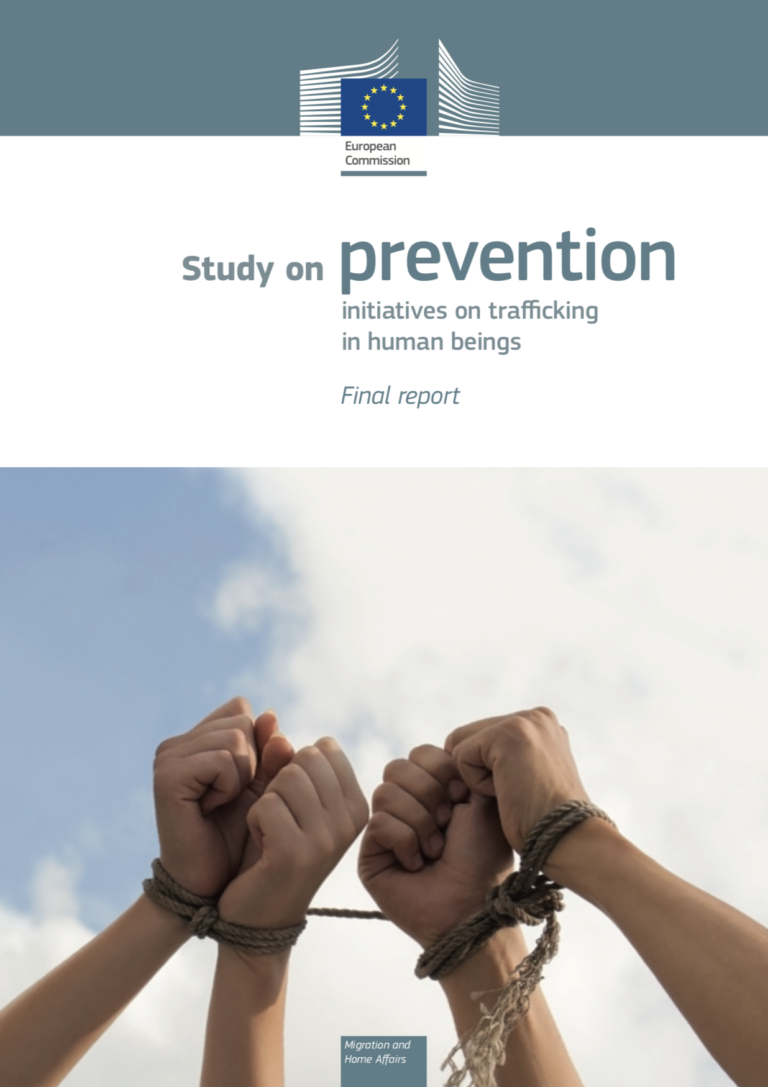
The study examined 43 prevention initiatives, of which a share of 40% concerned actions in Romania, Bulgaria and Hungary. The vast majority of the (cca 85 %) in the given sample targeted information and awareness-raising measures, followed by capacity-building and research and education programmes. Among the key findings of the study is that there is no go-standard for assessing the impact of prevention actions but rather a comprehensive and contextual approach should be followed.

Study on Prevention Initiatives on Trafficking in Human Beings DOWNLOAD

post

page

attachment

revision

nav_menu_item

custom_css

customize_changeset

oembed_cache

user_request

wp_block

wp_template

wp_template_part

wp_global_styles

wp_navigation

wp_font_family

wp_font_face

acf-taxonomy

acf-post-type

acf-field-group

acf-field

ai1ec_event

exactmetrics_note

The Five Corridors Project: Exploring Regulatory and Enforcement Mechanisms and their relationship with Fair Recruitment
GuidancePublications

More and more people are migrating for work each year, making a vital contribution to the societies and economies that host them. Yet researchers continue to document an array of abusive practices that occur systematically in the recruitment of migr...Read More

Covid-19: Garment Worker Perspectives
COVID-19 resourcesPublications

The coronavirus pandemic and resulting government actions to stem the spread of the virus have severely changed the way people across the world work and live. For Jordan’s garment sector, the national curfew and shutdown of business activity force...Read More

Reclaiming Migrant Women’s Narratives: A Feminist Participatory Action Research Project on ‘Safe and Fair’ Migration in Asia
Publications

The report shows that Safe and Fair migration cannot happen in a silo – the factors that produce gender segregated labour markets, industries dependent on flexible, underpaid and overworked migrant labour require a systemic change. This change can...Read More

TAGS:
Bitter Sweets: Prevalence of forced labour & child labour in the cocoa sectors of Cote d’Ivoire & Ghana
Publications

The primary aim of the study was to provide baseline estimates of prevalence of forced labour among children (aged 10-17 years) and adults (aged 18 and over) working in the cocoa sector in Ghana and Cote d' Ivoire, as well as updated estimates of th...Read More