
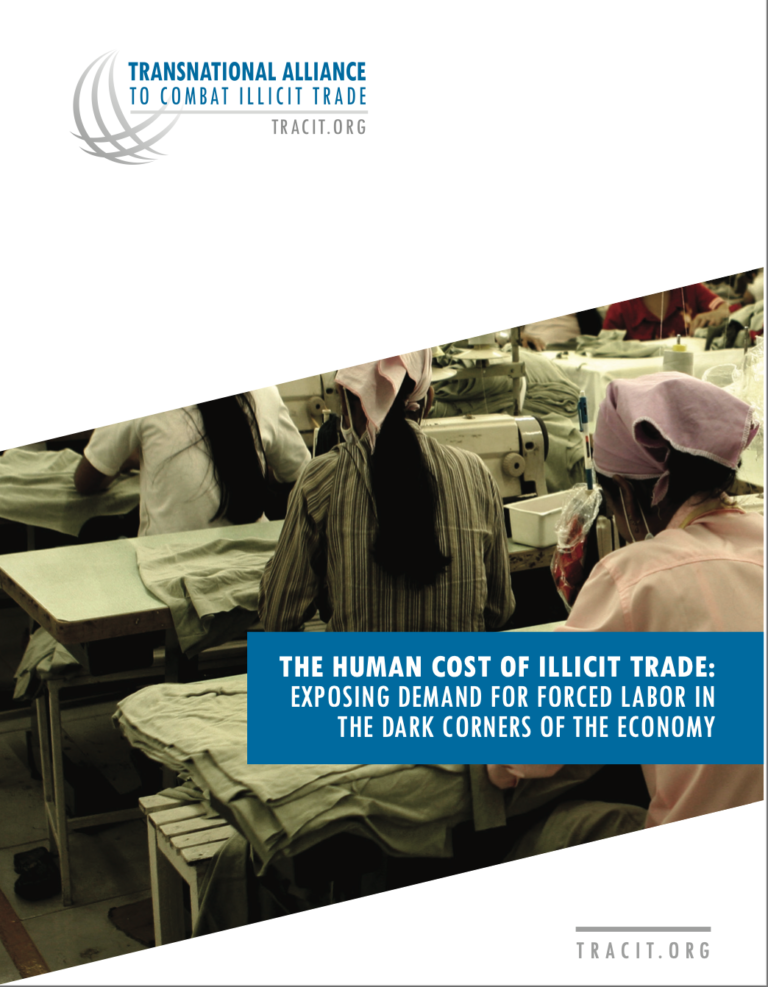
Amongst the worst crimes associated with illicit trade is the demand it creates for forced and child labor to carry out the tasks of making counterfeits, sewing fake logos on luxury apparel, or harvesting illegal fish. This report shows that women, children and men of all ages and race are forced to labor in illicit sectors, where they are abused by organized criminals pursuing clandestine profits. It concludes that ending these human rights abuses will only be possible by eradicating illicit trade and the demand for forced labor associated with it.

The human cost of illicit trade: Exposing Demand for Forced Labor in the Dark Corners of the Economy - Transnational Alliance to Combat Illicit Trade (TRACIT), 2021 DOWNLOAD

post

page

attachment

revision

nav_menu_item

custom_css

customize_changeset

oembed_cache

user_request

wp_block

wp_template

wp_template_part

wp_global_styles

wp_navigation

wp_font_family

wp_font_face

acf-taxonomy

acf-post-type

acf-field-group

acf-field

ai1ec_event

exactmetrics_note

Tackling Sexual Harassment in Low-Paid and Insecure Work
Guidance

The purpose of this position paper is to inform the development of an effective labour market enforcement strategy for tackling sexual harassment in the context of low-paid and insecure work. It seeks to nuance the discussion around se...Read More

Practical guide for supporting workers affected by the war in Ukraine
Guidance

On 24 February 2022, Russia invaded Ukraine sending shockwaves around the world and creating a humanitarian crisis. According to UN estimates, by 25 April, more than 5.2 million people had fled the country. This guide provides practical guid...Read More

Children’s Rights and Business Principles (CRBP)
Guidance

Developed by UNICEF, the UN Global Compact and Save the Children – the Children’s Rights and Business Principles are the first comprehensive set of principles to guide companies on the full range of actions they can take in the workplace, marke...Read More

TAGS: Global
White Paper: Realizing the Benefits of Worker Reporting Digital Tools
Guidance

This white paper seeks to promote broader – and meaningful – adoption of digital tools (phones, tablets, and web sites accessed via SMS, smartphone apps, hotlines, polls, social media, or other methods) used to gather information from workers in...Read More

TAGS: Reporting