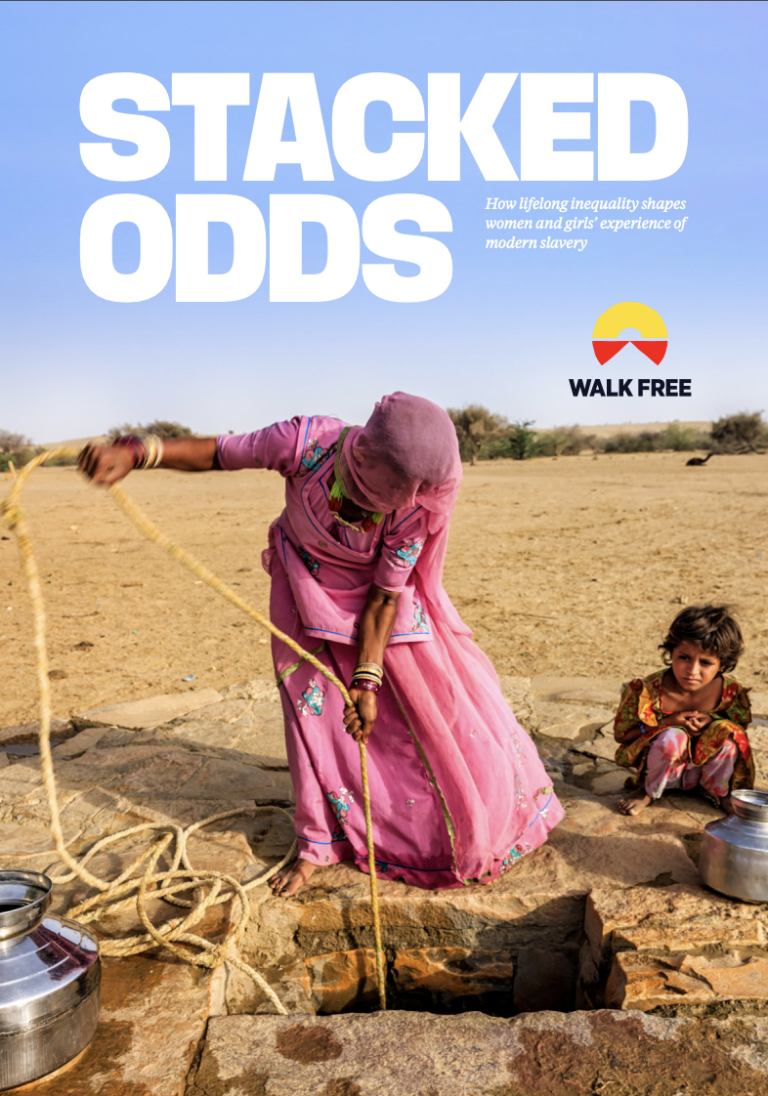
One in every 130 females globally is living in modern slavery. In fact, women and girls account for nearly three quarters (71 per cent) of all victims of modern slavery. Although modern slavery affects everyone, there is no escaping the fact that it is a gendered issue. Females account for a staggering 99 per cent of all victims of forced sexual exploitation, 84 per cent of all victims of forced marriage, and 58 per cent of all victims of forced labour.

Fundamentally, modern slavery is enabled by power imbalances. For women and girls, this imbalance is exacerbated by gender inequality and discrimination, which, as this report shows, is embedded in the fabric of our lives – the laws and social norms we live by, the different expectations imposed on daughters compared to sons.

Gender stacks the odds against girls from before they are born, to the end of their life. Sex selection during pregnancy, combined with infanticide, reduces the birth rates and survival of infant girls in societies that consider them economic burdens. As they transition through childhood, adolescence and adult life, the impacts of discrimination multiply and gender inequality grows. In most countries, fewer girls attend school and have access to medical care than boys, and women are more likely to end up in poverty, to work in the riskiest sectors of the informal economy – and ultimately, in modern slavery – than men.
Stacked Odds - How Lifelong Inequity Shapes Women and Girls' Experience of Modern Slavery, Walk Free - October 11, 2020 DOWNLOAD

post

page

attachment

revision

nav_menu_item

custom_css

customize_changeset

oembed_cache

user_request

wp_block

wp_template

wp_template_part

wp_global_styles

wp_navigation

wp_font_family

wp_font_face

acf-taxonomy

acf-post-type

acf-field-group

acf-field

ai1ec_event

exactmetrics_note

National Hotline 2017 Maine State Report
Graphics & InfographicsPublications

The data in this report represents signals and cases from January 1, 2017 through December 31, 2017 and is accurate as of July 11, 2018. Cases of trafficking may be ongoing or new information may be revealed to the National Hotline over time. Conseq...Read More

What works to prevent violence against children online?
Publications

The report, What works to prevent online violence against children, presents ways to address the growing worldwide concern of keeping children safe online, with a specific focus on two forms of online violence: child sexual abuse including groo...Read More

TAGS:
Malaysia’s Palm Oil Industry
Publications

The report is an industry-focused analysis of the Malaysian palm oil industry with specific insights into the industry’s governance and investment framework, relevant labour laws that apply to migrant workers in the industry and various dispute res...Read More

A Broken Partnership: How Clothing Brands Exploit Suppliers and Harm Workers – And What Can Be Done About It
GuidancePublications

The Center’s report includes a series of practical recommendations for how clothing brands and retailers can establish more constructive relationships with outsourced suppliers, with the goal of protecting the human rights and economic well-being ...Read More

TAGS: