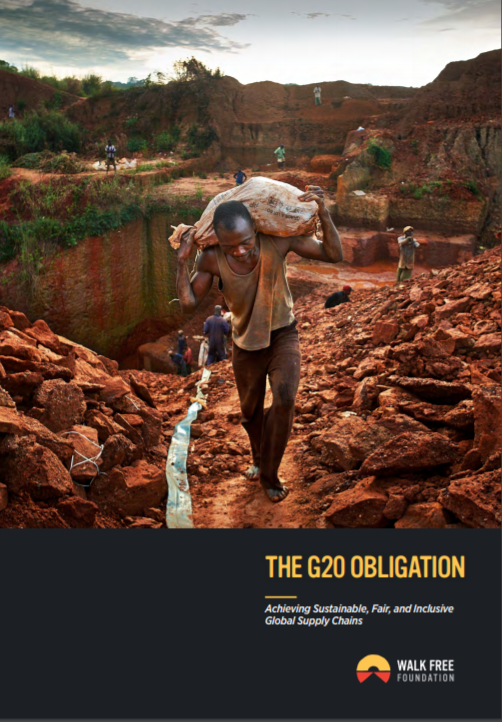
Modern Slavery is an umbrella term that captures the range of multifaceted and complex crimes, which include all forms of human trafficking, forced labour, debt bondage, forced or servile marriage, and the worst forms of child labour.

We know that millions of people in modern slavery are being exploited to work, often as low skilld labour, as part of a supply chain producing goods that are distributed to consumers throughout the world.

With the rapid acceleration of globalisation, global supply chains have grown exponentially, transforming the way organisations conduct cross-border production, investment, trade, and employment. Multinational enterprises have inherently complex, diverse, and dynamic supply chains.

The G20 Obligation - Achieving Sustainable, Fair, and Inclusive Global Supply Chains - Minderoo Foundation, 2018 DOWNLOAD

post

page

attachment

revision

nav_menu_item

custom_css

customize_changeset

oembed_cache

user_request

wp_block

wp_template

wp_template_part

wp_global_styles

wp_navigation

wp_font_family

wp_font_face

acf-taxonomy

acf-post-type

acf-field-group

acf-field

ai1ec_event

exactmetrics_note

Modern Slavery Act: Five Years of Reporting
Publications

The UK Modern Slavery Act 2015 (Act) was established nearly six years ago and was hailed as a landmark piece of legislation. Its aim was to encourage business to take action to eradicate modern slavery from its operations and supply chains. Fundamen...Read More

Anti-Trafficking Review Special Issue: Traffickers
Publications

Despite increased awareness and massive investments in combating human trafficking, there is still limited knowledge about traffickers – who they are, why they engage in trafficking, and how they operate. This Special Issue of Anti-Traffic...Read More

Leveraging innovation to fight trafficking in human beings: a comprehensive analysis of technology tools
News & AnalysisPublications

The publication takes stock of technology tools and initiatives developed to combat trafficking in human beings in its different forms in the OSCE area and beyond. It also examines the ways technology can be misused to facilitate trafficking in huma...Read More

Are child domestic workers worse off than their peers? Comparing children in domestic work, child marriage, and kinship care with biological children of household heads: Evidence from Zimbabwe
Publications

Child domestic work is a hidden form of child labour driven by poverty and social norms. However, little is known about the situations of child domestic workers. This study aims to describe and analyse gender-specific working conditions, health, and...Read More