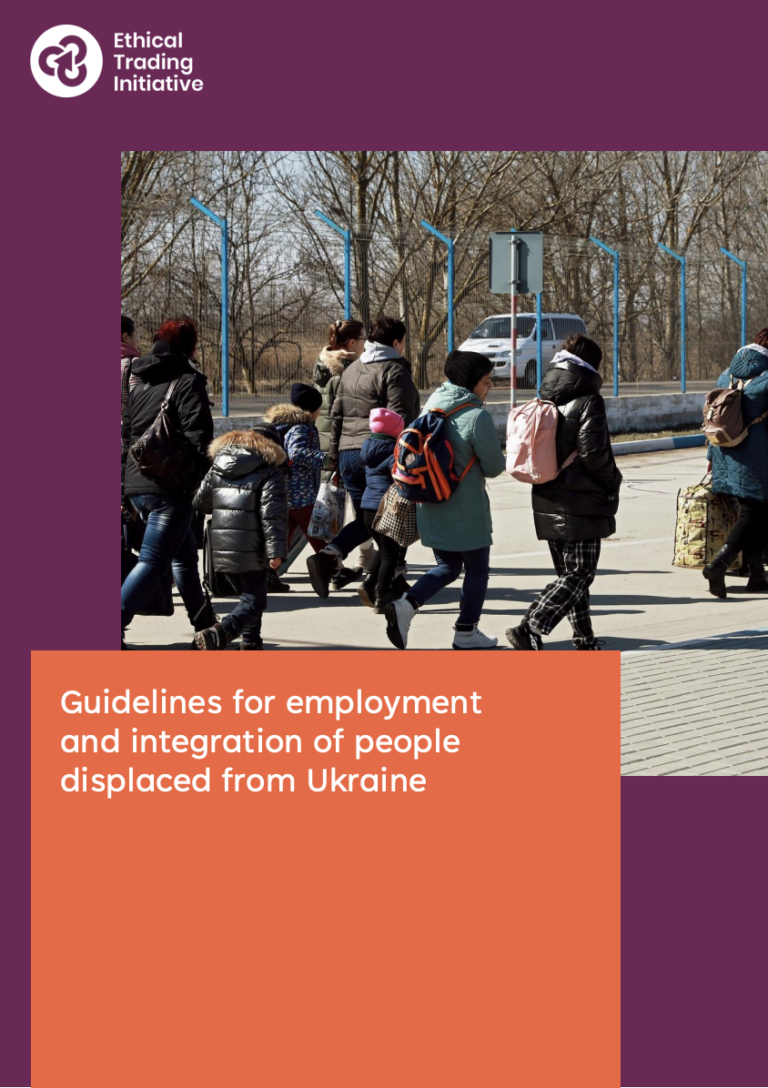
To reduce the risk to workers displaced due to the war in Ukraine, ETI established a working group with its members shortly after the Russian invasion, in early Spring 2022.

The aim of the working group has been to facilitate knowledge and intelligence sharing, identify good practice and develop practical guidelines. To ensure maximum coordination and collaboration, the working group has also been open to interested non-members working on this issue. Working group participants have collected and shared information received from suppliers and other stakeholders inside Ukraine and in neighbouring countries on the evolving situation and risks to displaced workers. ETI has also collated information on potential supply chain overlaps across 800 suppliers working with participating companies in seven countries (Poland, Romania, Hungary, Slovakia, Moldova, Italy and Germany). By mapping conflict-affected supply chains, ETI working group members have able to facilitate coordinated and consistent supplier advice and communication.

Guidelines for Employment and Integration of People Displaced from Ukraine - Ethical Trading Initiative, 2022 DOWNLOAD
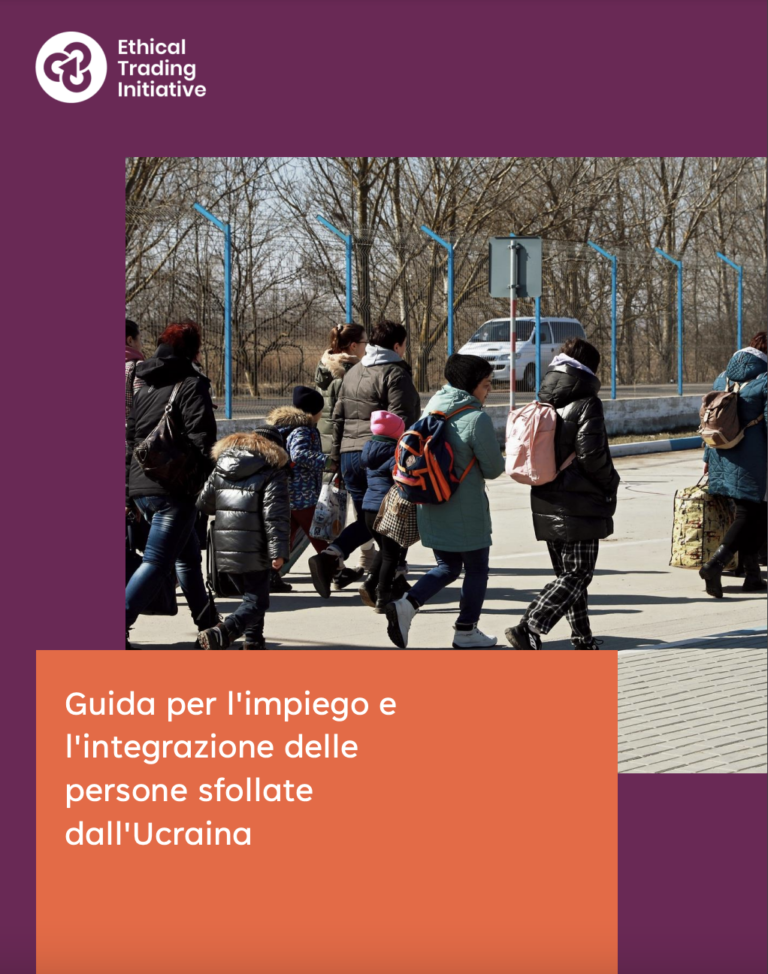
Guida per l'impiego e l'integrazione delle persone sfollate dall'Ucraina - Ethical Trading Initiative, 2022 DOWNLOAD
Wytyczne dotyczące zatrudnienia i integracji osób przesiedlonych z Ukrainy - Ethical Trading Initiative, 2022 DOWNLOAD
Ghid pentru angajarea și integrarea persoanelor strămutate din Ucraina - Ethical Trading Initiative, 2022 DOWNLOAD
Рекомендації щодо працевлаштування й інтеграції переселенців з України - Ethical Trading Initiative, 2022 DOWNLOAD

post

page

attachment

revision

nav_menu_item

custom_css

customize_changeset

oembed_cache

user_request

wp_block

wp_template

wp_template_part

wp_global_styles

wp_navigation

wp_font_family

wp_font_face

acf-taxonomy

acf-post-type

acf-field-group

acf-field

ai1ec_event

exactmetrics_note

Labor Share and Value Distribution
Guidance

This work is part of a series of Forced Labour Evidence Briefs that seek to bring academic research to bear on calls to address the root causes of the phenomenon in global supply chains and catalyse systemic change. To do so, the Briefs consolidate ...Read More

Fishers first: Good practices to end labour exploitation at sea
Good Practices

The purpose of this report is to present, analyse and share good practices and innovative interventions towards eradicating forced labour and other forms of labour exploitation in the fishing industry. This report consists of two parts. Chapters...Read More

Forced Labor Among Kenyan Migrant Workers in the Gulf Cooperation Council (GCC) Countries: A Prevalence Estimate Report
Guidance

GFEMS has launched a series of projects to combat forced labor among Kenyan migrant workers. As a part of this effort, GFEMS engaged NORC to measure the prevalence of forced labor among recently returned Kenyan migrant workers from Gulf Cooperation ...Read More

Forced labour: What investors need to know
Guidance

This briefing provides information on the risks and implications of forced labour in company operations and supply chains. It highlights the role for investor engagement in addressing this global problem. ...Read More

TAGS: Global