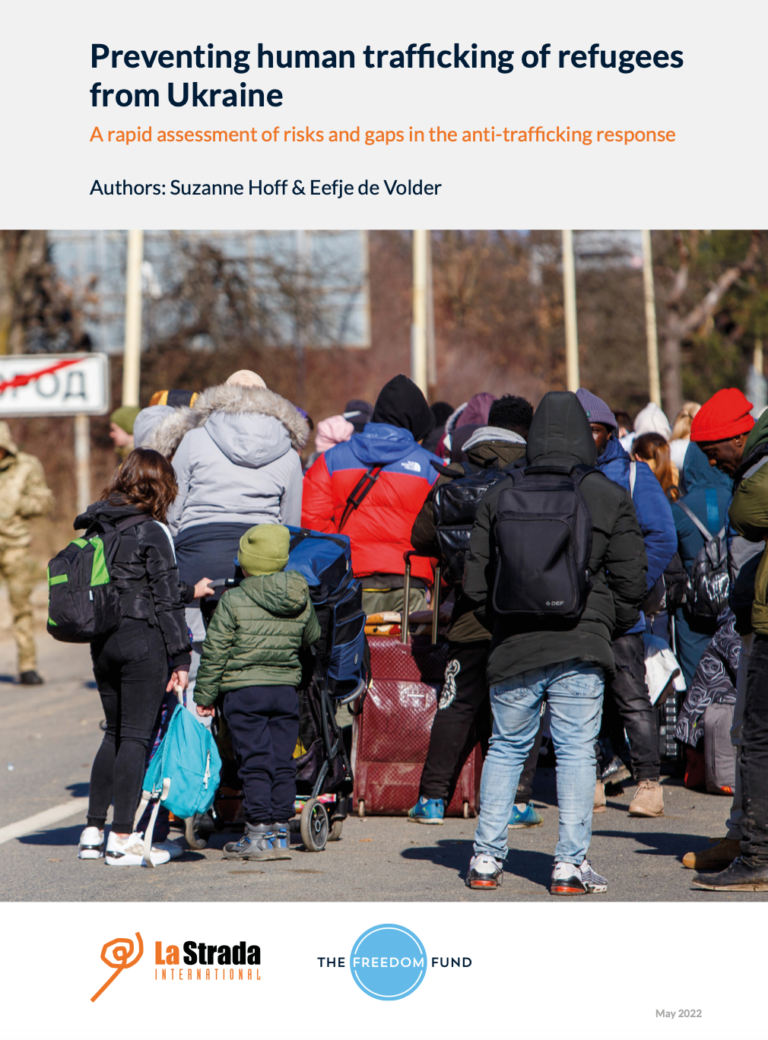
The Russian invasion of Ukraine has led to the largest movement of people in Europe since World War II. Those who are fleeing the war in Ukraine are in an extremely vulnerable position. Experience from conflicts worldwide shows that the instability and turmoil created by war is fertile ground for traffickers seeking to exploit the vulnerability of internally displaced people and refugees.

In the weeks since the war started in Ukraine, there has already been evidence of human trafficking activity. Requests to support potentially trafficked people in countries bordering Ukraine, and in other European countries, have already been received by anti-trafficking organisations. National law enforcement bodies are reporting suspicious behaviour that could indicate human trafficking. Hotlines are receiving increased levels of calls for advice.

Preventing human trafficking of refugees from Ukraine: A rapid assessment of risks and gaps in the anti-trafficking response - Suzanne Hoff & Eefje de Volder (La Strada International and the Freedom Fund), May 2022 DOWNLOAD

post

page

attachment

revision

nav_menu_item

custom_css

customize_changeset

oembed_cache

user_request

wp_block

wp_template

wp_template_part

wp_global_styles

wp_navigation

wp_font_family

wp_font_face

acf-taxonomy

acf-post-type

acf-field-group

acf-field

ai1ec_event

exactmetrics_note

National strategy for combating terrorist and other illicit financing
Guidance

Combating the pernicious impact of illicit finance upon our financial system, economy, and society is integral to strengthening U.S. national security and prosperity. While there has been substantial progress in the United States and globally in add...Read More

Modern Slavery Handbook
Guidance

We believe that everyone should read this handbook – and we have kept it small so that you can keep it in your work bag or desk drawer. This handbook was, however, specifically created for staff who work in the homelessness sector, particularly fr...Read More

Using Worker Voice Tools to Assess Relationships Between Workers and their Managers
Guidance

This note focuses on one dimension of how technology-enabled worker voice tools can be used: to gather qualitative data about the nature of relationships between managers and workers or communities at factories, farms, mines, and plantations. This i...Read More

How Can I Manage the Risk of Modern Slavery in My Supply Chain? GFEMS Highlights Three Promising Forced Labor Risk Detection Tools
Guidance

The COVID-19 pandemic has increased workers’ vulnerability to modern slavery across global apparel and manufacturing supply chains1. In addition to exacerbating risks to workers, the pandemic has increased consumers’ visibility on where and...Read More