
Abstract:

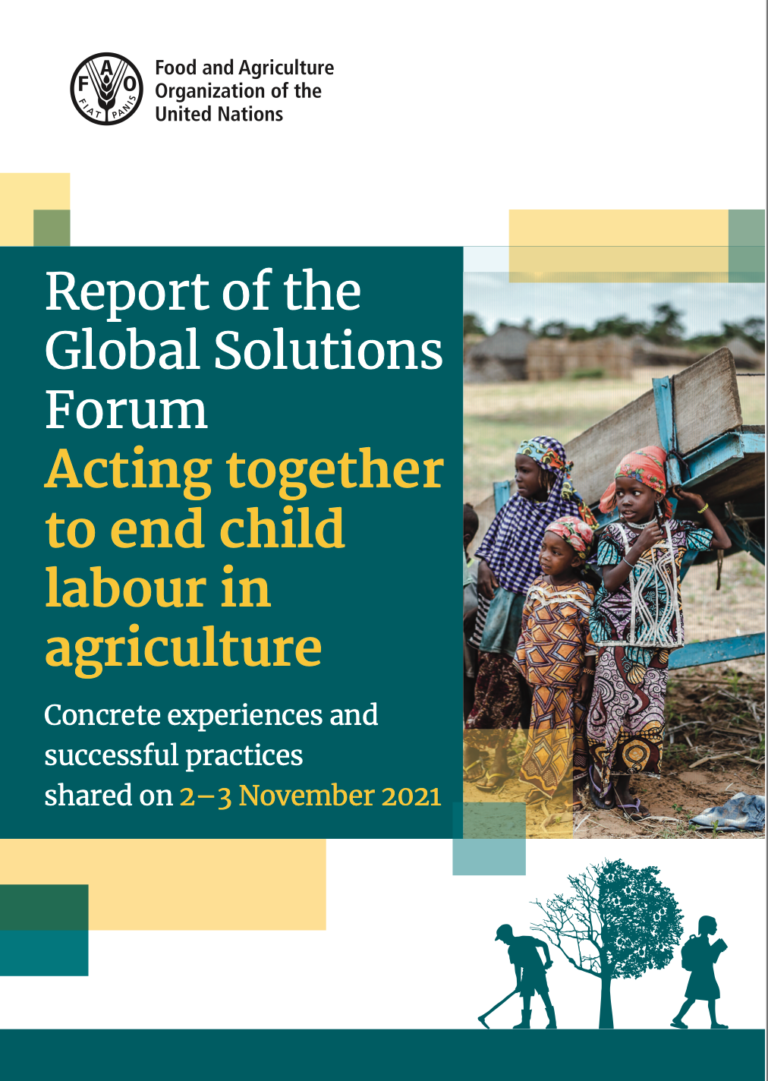
On 2–3 November 2021, to mobilize global action and highlight concrete solutions to eradicate child labour in agriculture, FAO, in close collaboration with the International Labour Organization (ILO) and in partnership with the International Partnership for Cooperation on Child Labour in Agriculture (IPCCLA) and the Alliance 8.7, organized a high-level virtual event: the Global Solutions Forum (GSF). The objectives of the GSF were to raise the voices and commitment of agricultural stakeholders, share game-changing solutions, and identify ways to step up concerted action to prevent and end child labour in all agricultural subsectors. The outcomes of the event are expected to inform the V Global Conference on Child Labour in 2022, along with other global initiatives such as the United Nations Decade of Family Farming.

Report of the Global Solutions Forum: Acting together to end child labour in agriculture (concrete experiences and successful practices shared on 2-3 November 2021) - Food and Agriculture Organization (FAO) of the United Nations, 2022 DOWNLOAD

post

page

attachment

revision

nav_menu_item

custom_css

customize_changeset

oembed_cache

user_request

wp_block

wp_template

wp_template_part

wp_global_styles

wp_navigation

wp_font_family

wp_font_face

acf-taxonomy

acf-post-type

acf-field-group

acf-field

ai1ec_event

exactmetrics_note

International Labor Migration: The Responsible Role of Business – BSR, 2008
GuidanceStandards & Codes of ConductGood Practices

In today’s globalized economy, the issue of international labor migration in supply chains is one of the most critical – yet largely unexplored – issues for our member companies and all businesses operating globally. Labor migrants now repr...Read More

Luxor Implementation Guidelines to the Athens Ethical Principles: Comprehensive Compliance Programme for Businesses
GuidanceGood Practices

Guide to assist businesses in the implementation of the Athens Ethical Principles. The guide is structured around seven principles.

National Referral Mechanisms – Joining Efforts to Protect the Rights of Trafficked Persons: A Practical Handbook
GuidanceGood Practices

National referral mechanisms (NRMs) are the institutional mechanisms that help states identify human trafficking victims and ensure their protection. This handbook provides a guidance model which all OSCE participating States can adapt and apply wit...Read More

National Referral Mechanisms – Joining Efforts to Protect the Rights of Trafficked Persons: A Practical Handbook
GuidanceGood Practices

This handbook provides guidance on how to design and implement sustainable mechanisms and structures to combat human trafficking and support victims. It also provides guidance on how to monitor and build the capacity of such mechanisms and structure...Read More