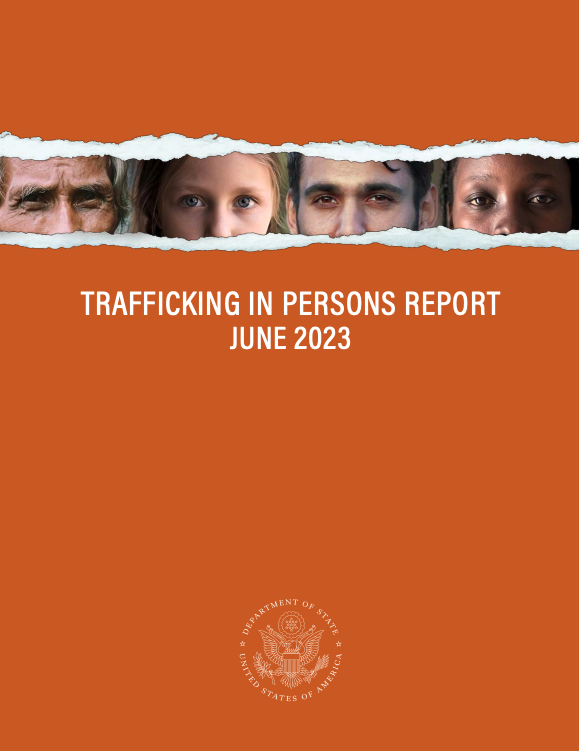
Based on the theme of partnership, this year’s report examines the ways in which governments and other stakeholders have collaborated to advance anti-trafficking priorities and goals, and emphasizes the importance of including a breadth of groups and individuals in anti-trafficking work. Governments are increasingly prioritizing survivor engagement and, by ensuring that anti-trafficking programming and policies reflect the realities of human trafficking, and integrate trauma-informed, survivor-informed, and victim-centered approaches, they are seeing improved outcomes, the report says. However, NGOs and survivors should not be expected to carry the financial burden of a government’s anti-trafficking responses, and it is essential for governments to provide adequate resourcing and financial support.
Partnerships that focus on technological innovations to combat human trafficking are increasingly evolving among a range of multidisciplinary stakeholders, says the report. Governments can learn from and replicate innovative tech applications and partnerships among the private sector and civil society to improve their own efforts to advance responsible supply chains, for instance by strengthening supply chain management with risk mapping and due diligence tools; bolstering worker engagement through the provision of rights-based information and training; and driving worker empowerment through technologies designed to reinforce responsible recruitment and grievance mechanisms.
Amongst others, changes in this year’s country rankings include upgrades of Ethiopia, Hong Kong, and Indonesia to Tier 2, and Brunei, Malaysia and Vietnam to the Tier 2 Watch List. Namibia and Slovenia have been downgraded to Tier 2, and Algeria, Chad and Djibouti to Tier 3. Thailand and Taiwan remain in Tier 2 and Tier 1, respectively, despite calls by the Seafood Working Group to downgrade both countries.
Topics of special interest in this year’s report include forced criminality in cyberscam operations and the multi-billion dollar industry that drives it; concealment of forced labour and other labour abuses by manufacturers, leading to unreliable social audits; growing awareness of the number of boys exploited in human trafficking, and the inadequate support services available to them; and online recruitment by traffickers taking advantage of the increasing use of social media and smartphone apps in developing economies.
The report also includes a series of Survivor Insights – pieces written by those with lived experience of human trafficking, exploring themes such cultural barriers to survivor inclusion, equity in survivor leadership, and the role of culture in human trafficking.
This year’s TIP Report Heroes include Pureza Lopes Loyola, whose quest to find her son led the Brazilian Government to create an inspection group of law enforcement officers and labour prosecutors to identify and support victims of labour trafficking and exploitation; Mech Dara, whose investigative reporting on increased incidents of human trafficking in Cambodia brought international attention to the scandal of forced labour in cyberscam compounds; and R. Evon Benson-Idahosa, an expert on the intersectionality of human trafficking and the economic empowerment of women in sub-Saharan Africa, who advocates globally for an end to sex trafficking. Congratulations to all eight heroes!
Secretary Blinken introduces the report by saying, “The pages that follow are an immediate call to action. Tackling a global problem like trafficking requires a global coalition, one that cuts across government, business, and civil society. By sharing resources and information, we can better equip front-line stakeholders to track and respond to evolving trafficking trends. By partnering with survivors, we can better establish trauma-informed anti-trafficking policies and strategies. And by leveraging technology, we can better address the nexus between finance and human trafficking and better detect online exploitation.”
The TIP Report is the U.S. Government’s principal diplomatic and diagnostic tool to guide relations with foreign governments on human trafficking. As required by the Trafficking Victims Protection Act, the TIP Report assesses government efforts around the world to prevent trafficking, protect victims, and prosecute traffickers. This year’s report, the 23rd installment, includes narratives for 188 countries and territories.