
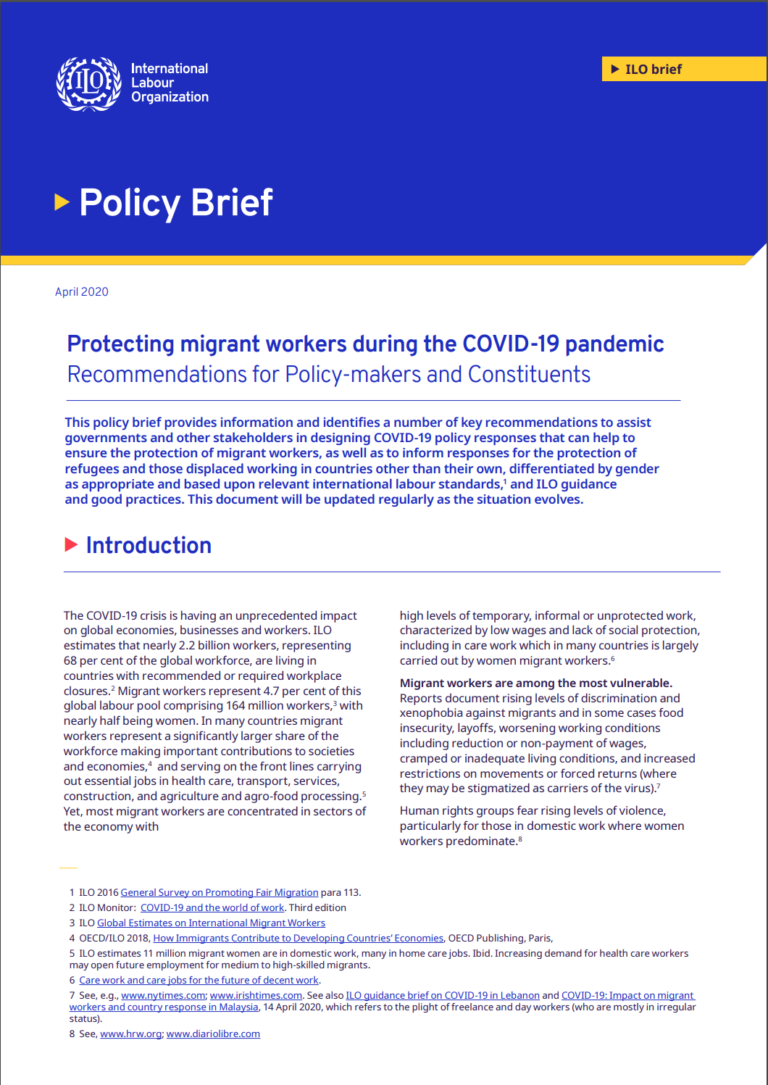
This policy brief provides information and identifies a number of key recommendations to assist governments and other stakeholders in designing COVID-19 policy responses that can help to ensure the protection of migrant workers, as well as to inform responses for the protection of refugees and those displaced working in countries other than their own, differentiated by gender as appropriate and based upon relevant international labour standards,1 and ILO guidance and good practices. This document will be updated regularly as the situation evolves.

The brief is also available in Spanish, French, Indonesian, Russian, and Turkish (see below).

Protecting migrant workers during the COVID-19 pandemic - International Labour Organization, 2020 DOWNLOAD
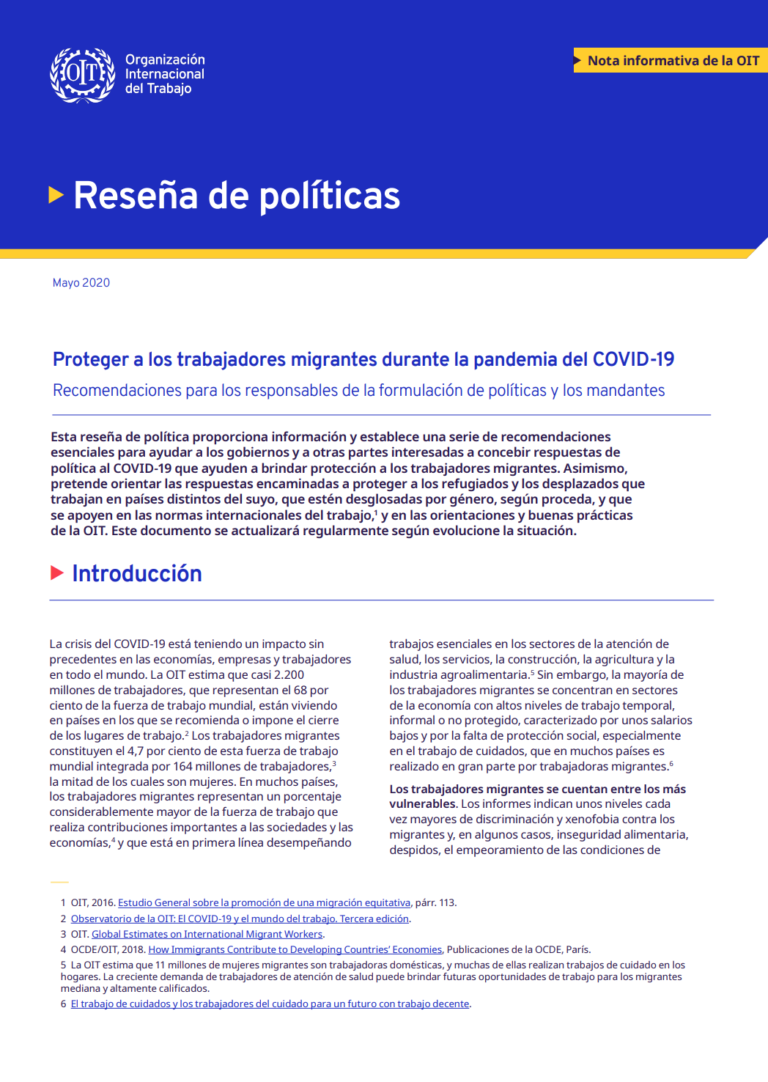
Proteger a los trabajadores migrantes durante la pandemia del COVID-19 - OIT, 2020 DOWNLOAD
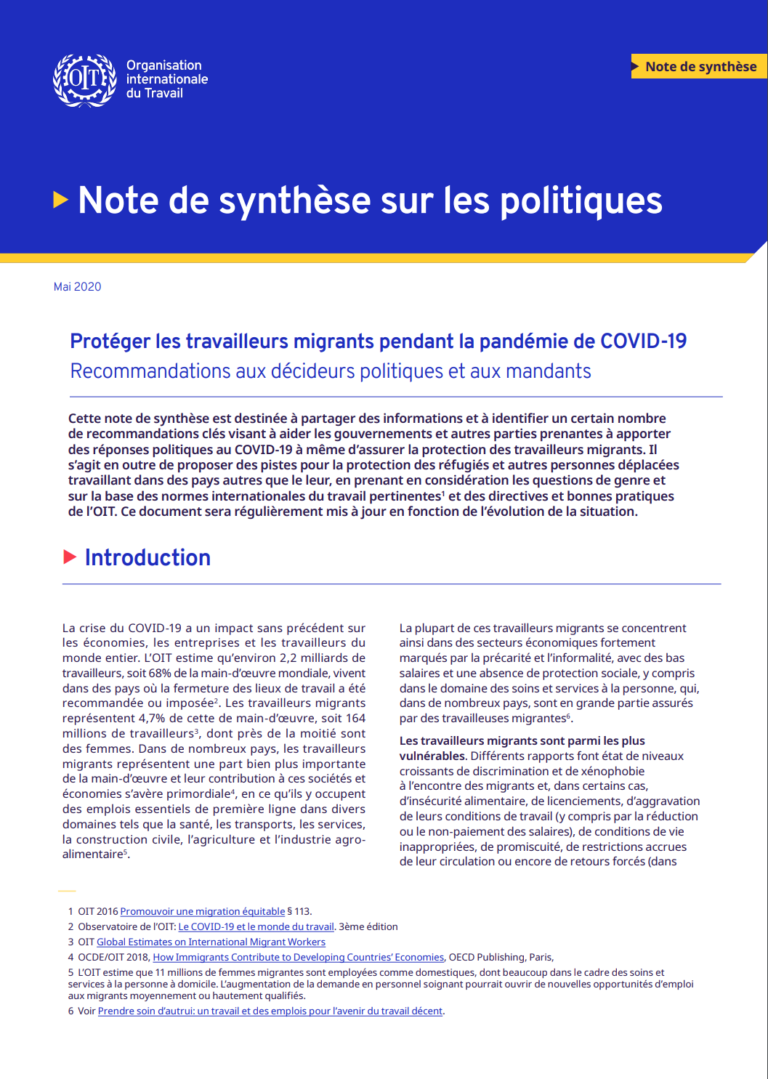
Protéger les travailleurs migrants pendant la pandémie de COVID-19 - L'OIT, 2020 DOWNLOAD
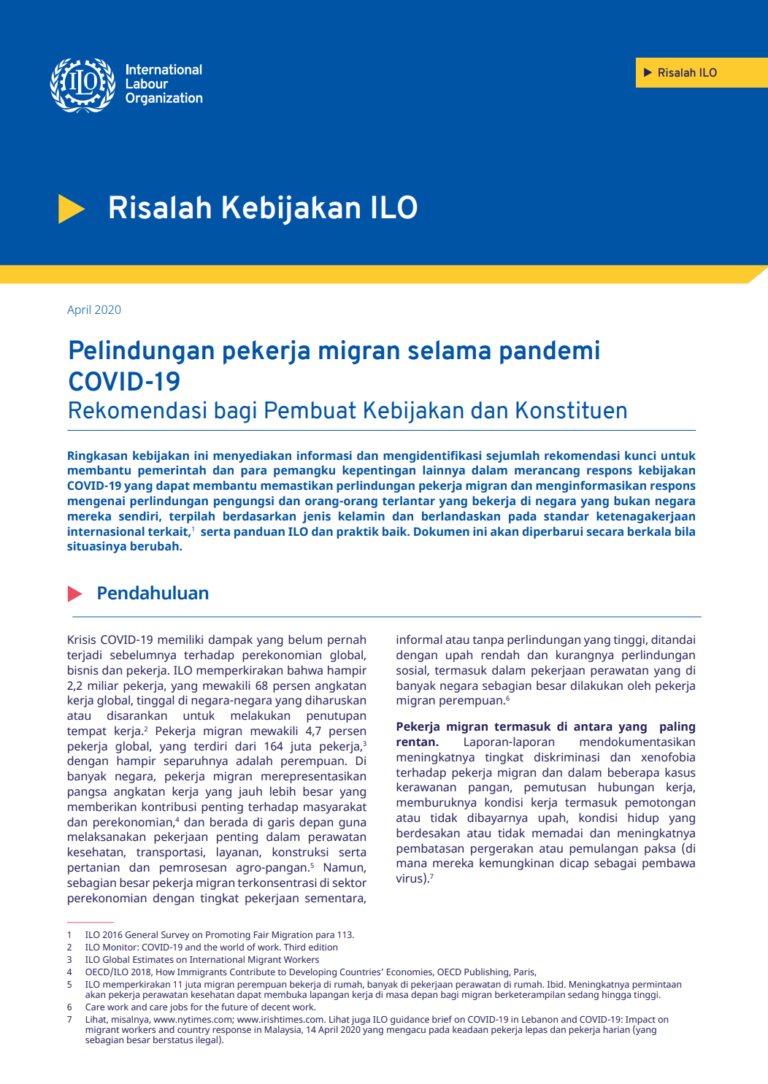
Pelindungan pekerja migran selama pandemi COVID-19 - International Labour Organization, 2020 DOWNLOAD
Как защитить трудовых мигрантов в условиях пандемии COVID-19 - MOT, 2020 DOWNLOAD
COVID-19 küresel salgınında göçmen işçileri korumak - International Labour Organization DOWNLOAD

post

page

attachment

revision

nav_menu_item

custom_css

customize_changeset

oembed_cache

user_request

wp_block

wp_template

wp_template_part

wp_global_styles

wp_navigation

wp_font_family

wp_font_face

acf-taxonomy

acf-post-type

acf-field-group

acf-field

ai1ec_event

exactmetrics_note

From Local to Global: Building a strategic litigation ecosystem to address modern slavery in supply chains
Guidance

This briefing summarises the outcomes of the scopingresearch conducted by The Remedy Project, offeringan insight into the existing corporate accountabilitylegal landscape in South East Asia, and the barrierspreventing local groups from engaging in t...Read More

Business Models and Labour Standards: Making the Connection
Guidance

This report is aimed at opening up a new front of discussion that looks at how business models create these downward pressures on labour standards and argues that until such models are changed the problems with the Corporate Social Responsibility (C...Read More

TAGS:
Corporate Human Rights Benchmark 2022: Insights Report
News & AnalysisGuidanceStandards & Codes of Conduct

The Corporate Human Rights Benchmark (CHRB) assessed three sectors in 2022: food and agricultural products (57 companies), ICT manufacturing (43 companies) and automotive manufacturing (29 companies). The revised CHRB methodology devotes more at...Read More

TAGS: Global
From Policies to Impacts: Analysing Modern Slavery Risks in Portfolio Companies
Guidance

As a result of the progressive legalization of international business and human rights “soft law” standards, the “S” of “ESG” is no longer an optional criterion for investors to include in their decision-making process, but it is becom...Read More